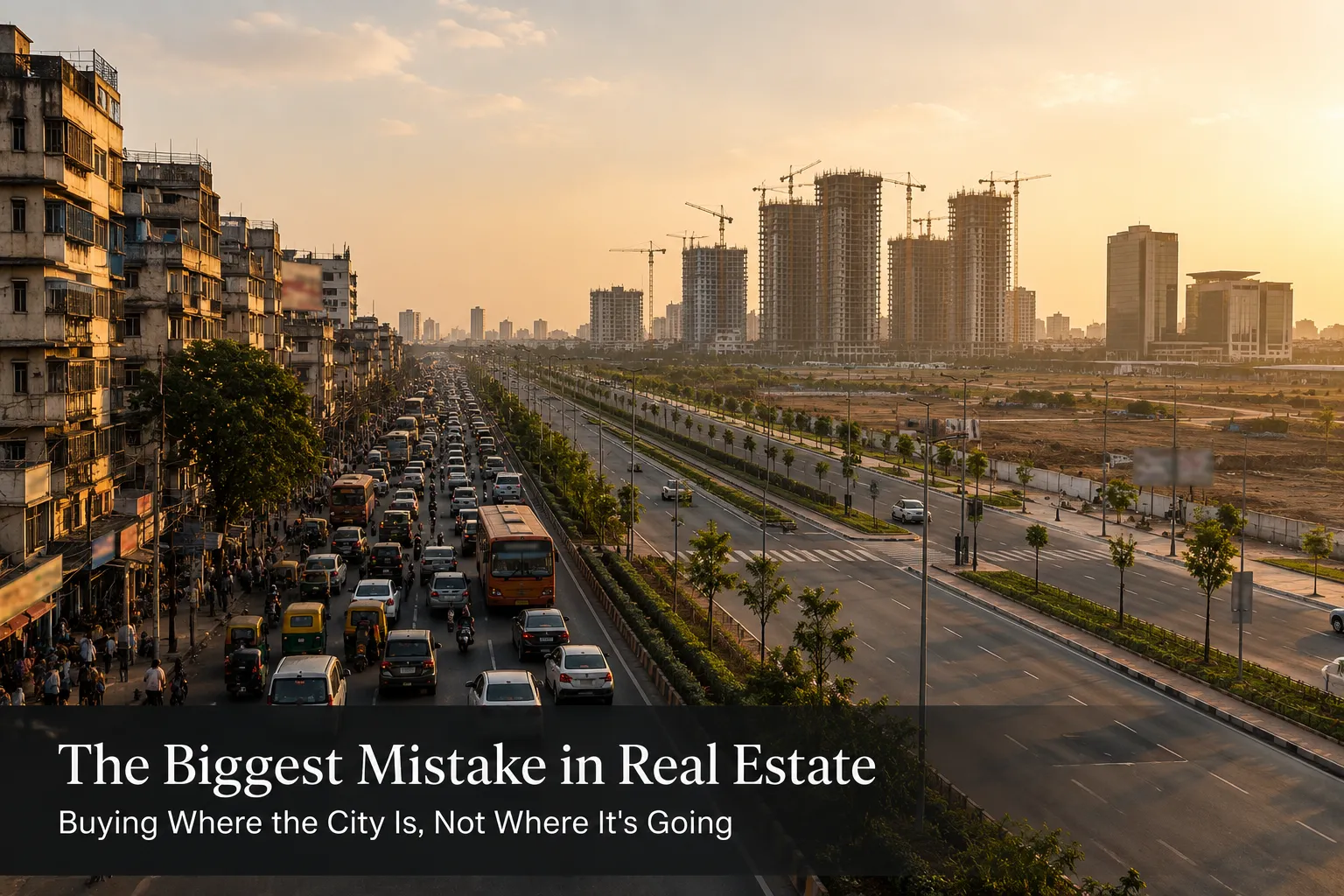
The Biggest Mistake in Real Estate: Buying Where the City Is, Not Where It's Going
The Biggest Mistake in Real Estate: Buying Where the City Is, Not Where It's Going
Categories
- Tips
- News
- Articles
- Guides
- Market Insights
Recent Posts
Tips / 17 Sept 2026
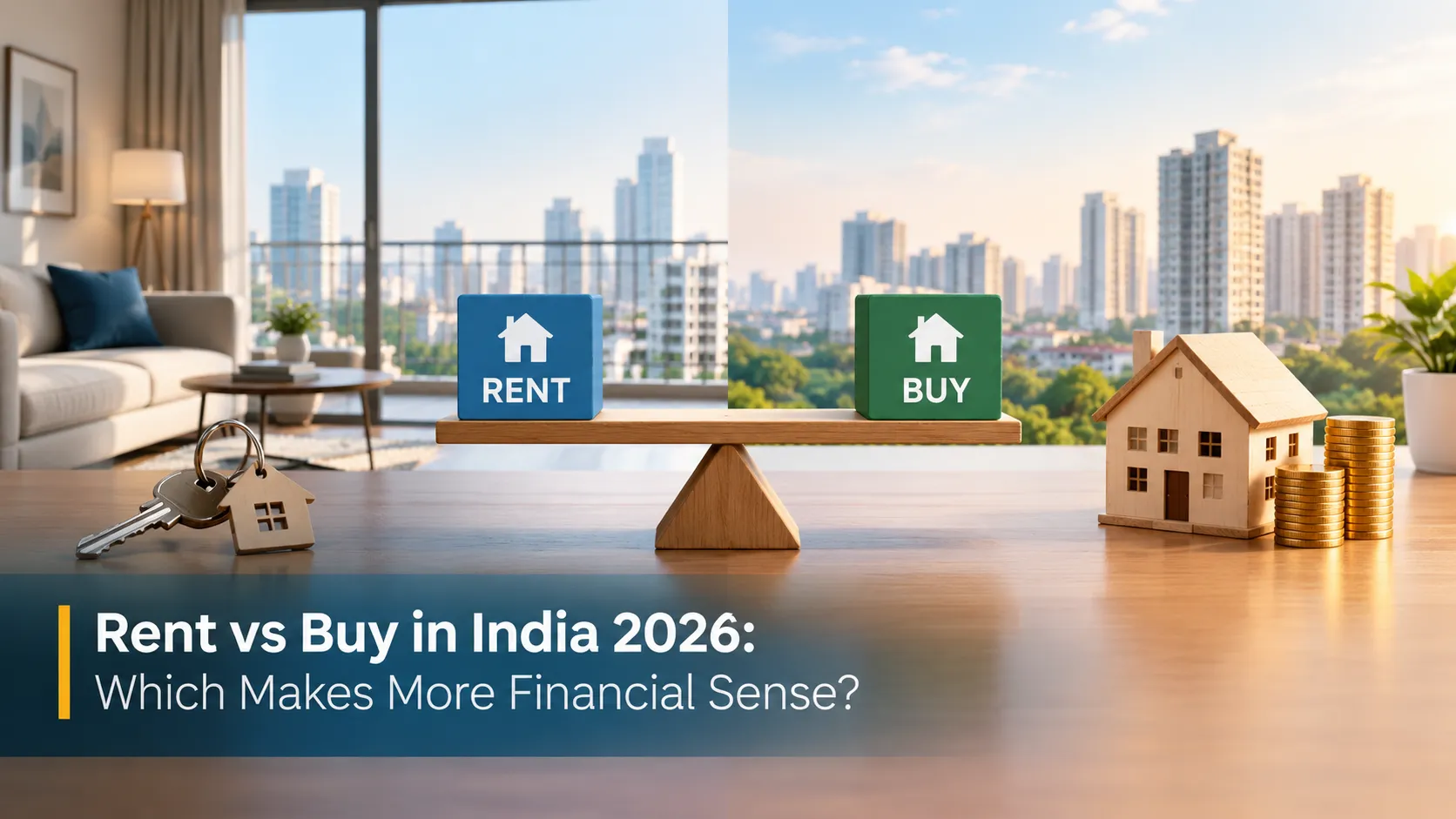
Rent vs Buy in India 2026: Which Makes More Financial Sense?
News / 17 Sept 2026
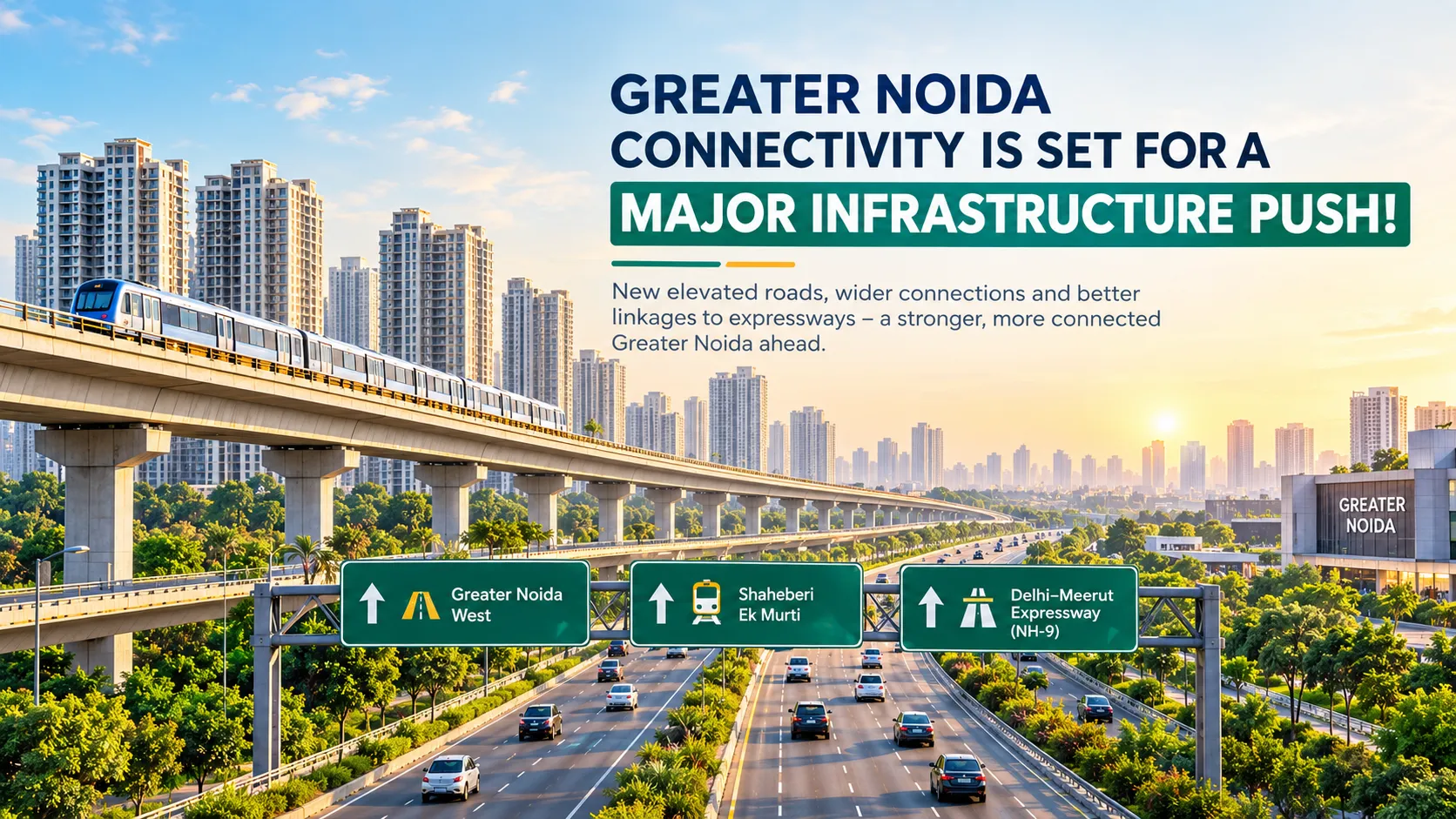
Greater Noida Connectivity 2026: Key Infrastructure Developments
Articles / 16 Sept 2026
What Counts as a Good Rental Yield in India?

Guides / 16 Sept 2026
Prepay or Extend: Cut Your Home Loan EMI or Tenure?
The biggest mistake most property buyers make isn't buying the wrong flat; it's buying where the city already is. By the time an area feels safe, developed, and validated, the prices have already moved. This blog traces the pattern that every major NCR appreciation story has followed — from Greater Noida West at ₹2,800 per sq ft to Dwarka Expressway's 58% surge and explains the one question every buyer should be asking before they shortlist a single property.
Here's a mistake that costs people lakhs- sometimes crores- and almost nobody talks about it plainly.
Most buyers look at a location and ask: is this area developed? Is it safe? Are there schools, hospitals, markets? Is it convenient right now?
These are reasonable questions. But they're the wrong ones if your goal is building wealth through real estate. Because by the time an area has everything — good roads, established schools, a functioning market, metro access, decent restaurants — the property prices have already moved. Significantly. The people who bought when the area had none of those things made the real money. You're just buying their appreciation.
The biggest mistake in real estate isn't buying the wrong flat. It's buying where the city already is, instead of buying where the city is going.
Table of Contents
Every High-Value Location Started as an Overlooked One
This isn't a theory. Look at any premium address in NCR today and trace it back 10 to 15 years.
Noida Sector 62 — now one of Noida's most in-demand corporate and residential addresses, with property prices comfortably above ₹10,000 per sq ft was considered an inconvenient peripheral sector when the IT parks first arrived in the early 2000s. The professionals who bought there when it felt like a stretch are sitting on substantial appreciation today.
Noida Sector 150 — currently Noida's most premium residential address, with luxury towers touching ₹14,000 to ₹18,000 per sq ft was largely open land a decade ago. The buyers who paid ₹4,500 to ₹5,500 per sq ft for early-phase inventory in what would become Sector 150 looked like they were taking a risk at the time. They weren't. They were reading the infrastructure map.
Greater Noida West (Noida Extension) — today a dense, active residential corridor with over 100,000 families, functional schools, hospitals, and organised retail was farmland and construction sites as recently as 2012 to 2014. Buyers who entered when developers were offering ₹2,200 to ₹2,800 per sq ft — when the roads were broken, and the nearest market was a 20-minute drive — have seen the corridor deliver 80% to 100% appreciation over a decade.
Dwarka Expressway — now fully operational with an airport link tunnel and metro connectivity was a politically stalled project for over a decade. Buyers who held positions on that corridor through the delays, entering at ₹3,500 to ₹4,500 per sq ft in early years, have watched the market record a 58% year-on-year surge as recently as Q1 2025.
The pattern is consistent. The overlooked location of today is the established address of tomorrow. The question is whether you can identify it before the crowd does.
The Pattern Is Always the Same
Once you see it, you can't unsee it. Every major real estate appreciation story in NCR and across India's major cities follows the same sequence.
Infrastructure is announced. A metro line is approved. An expressway is planned. An airport gets Cabinet clearance. At this point, prices are still low because announcements have been broken before. Most people wait.
Companies move in. The first IT park opens. A corporate campus breaks ground. An institutional anchor a hospital, a university, a logistics hub takes position. Now the employment base is real. A small wave of buyers follows.
People follow. The professionals working in those companies need somewhere to live. Residential demand picks up. Developers launch. Prices start moving.
Property prices respond. By this point, the story is obvious. Everyone can see the potential. The financial press covers it. Brokers pitch it. And the buyers who enter now — when it feels safe and validated are buying at prices that reflect all the appreciation that already happened in stages one, two, and three.
The irony is that real estate feels least risky to buy when it's most expensive, and most risky to buy when the upside is actually greatest. The discomfort of buying into an unfinished corridor is precisely what creates the return.
The Question Every Buyer Should Actually Be Asking
Most buyers look at a location and ask: what does this area look like today?
The question that creates wealth is different: what will this location look like in 10 years?
Those are not the same question. And answering the second one requires a different kind of analysis, not checking what's there, but understanding what's coming.
You're looking for infrastructure signals: confirmed projects, not just proposals. Cabinet approvals with funding, not just political announcements. Land acquisition that's already underway. Construction that's physically visible. These are the signals that distinguish a corridor with genuine momentum from one that's been "about to develop" for fifteen years.
You're also looking for employment anchors. Infrastructure without jobs doesn't create sustained residential demand. The Jewar Airport story isn't just about a runway — it's about the hotels, logistics facilities, aerospace clusters, and corporate campuses that airport infrastructure historically attracts. The question is which residential corridors sit in the path of that employment wave before it arrives.
What This Looks Like in Delhi NCR Right Now
Applying this framework to Delhi NCR in 2026 points toward a few corridors that fit the pattern of "overlooked today, obvious tomorrow."
The Yamuna Expressway belt between Greater Noida and Jewar currently underpriced relative to Jewar Airport's confirmed construction timeline. The airport itself is visibly under construction. The RRTS link is approved. The question isn't whether this corridor develops; it's which specific pockets along it benefit most and over what timeline. Buyers who've been waiting for this to feel "safe" are already behind the early movers.
Areas along Delhi's proposed metro Phase V corridors — particularly the northern and eastern Delhi pockets that gained from the Pink Line ring completion. Localities that were genuinely peripheral before the ring closed are now metro-connected for the first time. That connectivity shift takes 18 to 24 months to fully price into local property markets.
Old Gurugram — Sector 45, 47, and surrounding pockets — currently trading at a discount to the Gurugram premium precisely because metro connectivity hasn't existed there. The Cabinet-approved Gurugram metro extension changes that equation directly. The discount exists because of a fixable problem. Fixable problems have a way of getting fixed.
A Real-World Scenario: The Buyer Who Got the Timing Right
A friend of mine bought a flat in Greater Noida West in 2014, Sector 1, ₹2,800 per sq ft. Everyone around him said it was too far, too undeveloped, too risky. The roads were bad. The nearest decent school was a 20-minute drive. There was exactly one functional market within walking distance.
He wasn't buying the area as it was. He was buying the trajectory: approved GNIDA sector plan, active construction across multiple residential projects, NH-24 widening already underway, and a demographic wave of young families priced out of Noida looking for the next viable residential belt.
A decade later, that flat is worth approximately ₹7,500 per sq ft. The roads are good. There are five schools within 5 km. The nearest mall is a 10-minute drive. His return wasn't because he got lucky. It was because he asked the right question at the right time.
The Common Mistake — Waiting for Validation
The most frequent pattern I see among buyers who miss growth cycles isn't that they lack information. It's that they wait for validation before acting.
They want to see the metro station open before buying near it. They want to see the airport operational before buying along its influence corridor. They want to see good schools before moving to a sector that currently lacks them.
By the time all of that is visible, the price already reflects it. Validation and return are inversely related in real estate. The more confident everyone feels about a location, the less upside remains for a new buyer.
This doesn't mean buying blindly. It means distinguishing between confirmed infrastructure with genuine funding and timeline visibility versus speculative "potential" that may never materialise. The first is where early-mover returns come from. The second is where early-mover losses come from. The skill is telling them apart — and that requires ground-level research, not just following what's being marketed.
The Bottom Line
The best real estate investments aren't found by following development. They're found by anticipating it.
Every overlooked location that's now a premium address went through the same stages. Infrastructure arrived before residents did. Companies arrived before families did. Prices moved before most buyers felt comfortable. And by the time the location felt validated, the return had already largely happened.
The question isn't what this area looks like today. It's what it looks like in 10 years and whether you can see that clearly enough to act before the crowd does.
Trying to identify where in Delhi NCR the next growth cycle is forming? Speak with a local expert who reads infrastructure signals, employment anchors, and corridor momentum at the ground level — not just what's currently being marketed. #PropertyKaDNA
Tags
Tags
Frequently Asked Questions
Top 5 Best Properties in Delhi NCR This Week
Handpicked properties with best price & location
Popular in Greater Noida
Top-rated residential & commercial projects across Greater Noida