
Buying Residential Plots in India: 15 Things to Check First

Ankita Mishra
Real Estate Advisor
She helps buyers, investors, and NRIs navigate property decisions with clarity, from shortlisting the right location to understanding the legal and financial side of every transaction.
Categories
- Guides
- Articles
Recent Posts

Guides / 05 Nov 2026
Property Tax in Delhi vs Noida vs Gurugram: Key Differences Explained (2026)

Guides / 03 Nov 2026
How to Choose the Right Plot Size for Your Dream Home
Articles / 03 Oct 2026
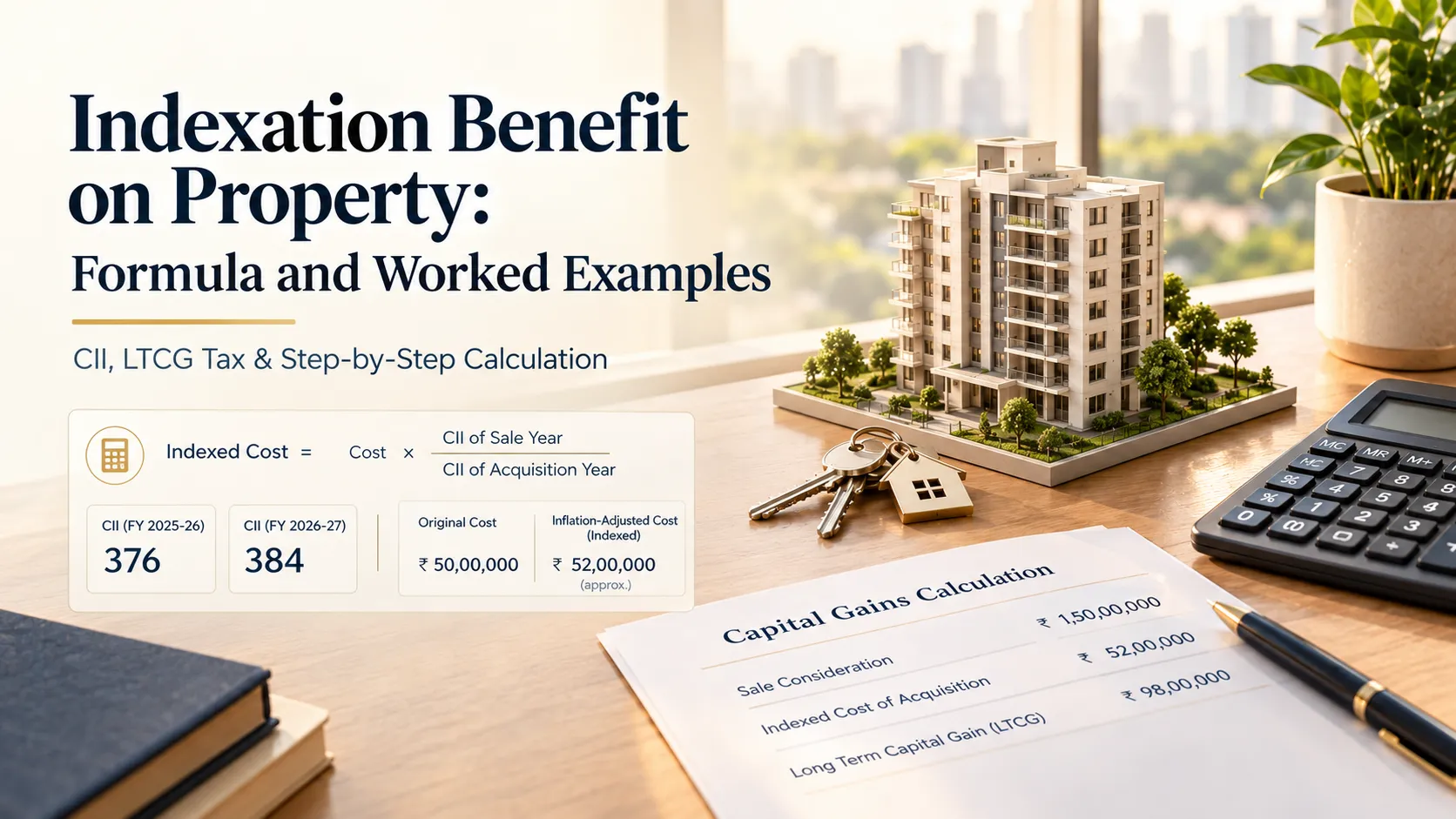
Indexation Benefit on Property: Formula and Worked Examples

Guides / 03 Oct 2026
Noida vs Gurgaon: Which City Is Better for Property Investment?
An empty plot never shows you what's wrong with it, the way a cracked wall or a leaking roof would. The only inspection a plot allows is paperwork. Here are the 15 checks, from title chain to encumbrance certificate to approved layout, that stand between a safe land investment and a dispute you discover years too late.
Buying Residential Plots in India is, on paper, the simplest kind of real estate purchase there is: no builder to chase, no construction quality to assess, no possession delay to worry about. Residential Plot Buying is also, for exactly that reason, where due diligence matters more than almost anywhere else in property, because an empty piece of land hides every problem instead of showing it. A Plot Buying Checklist isn't optional paperwork, it's the only inspection a plot will ever let you do. Land Investment in India rewards the buyers who treat the documents as the product, not the land itself.
Here's what most plot-buying guides get backwards: they list the documents to check and assume that's the whole job. It isn't. Knowing a document exists and knowing how to actually read it for red flags are two different skills, and this guide covers both.
Table of Contents
Why a Plot Is Riskier to Buy Than a Flat
Picture buying a used car you've never seen started, based only on a photograph and the seller's word that the engine runs fine. You'd never do it, obviously, you'd insist on a test drive, a mechanic's check, proof of service history. Yet buyers routinely do the land equivalent, paying for a plot based on a site visit, a verbal assurance about ownership, and a sale agreement that looks official enough. A flat comes with a builder, a RERA registration, a construction history you can inspect. A plot comes with none of that. What you're really buying is a chain of ownership and approvals stretching back years, sometimes decades, and if any link in that chain is broken, no amount of admiring the view fixes it.
That's the one thing worth remembering from this entire guide: with an apartment, a bad purchase usually shows up early, in cracks, delays, or quality issues you can see. With a plot, a bad purchase shows up years later, in a courtroom, after you've already built on it or sold it to someone else. The checklist below exists to move that discovery from "years later" to "before you pay."
The 15-Point Plot Buying Checklist
- Sale deed verification. Confirm the current seller's name matches the name on the registered sale deed exactly, and trace the chain of ownership back at least 13 to 30 years depending on your state's requirement, not just the most recent transfer.
- Land title verification. Establish whether the title is clear and marketable, free of competing claims, before you proceed. This is the single most important check on the list, and worth a lawyer's time even on a modest plot.
- Encumbrance certificate for the plot. Pull this from the sub-registrar's office to confirm the land carries no pending mortgage, lien, or legal charge against it. A clean encumbrance certificate over the relevant period is non-negotiable.
- Mutation records. Check that the land has been formally mutated in revenue records to reflect the current owner's name. A sale deed alone doesn't complete the transfer, mutation is what updates the government's own land records.
- Land use verification. Confirm the land is officially classified for residential use, not agricultural land awaiting conversion. Building on agricultural land without proper conversion exposes you to penalties and demolition risk.
- Approved layout for the plot. Verify the layout plan is approved by the relevant development authority, and that your specific plot number appears correctly within that sanctioned layout, not just the broader scheme.
- RERA registration. For plotted developments above the threshold size defined by your state, confirm RERA registration and cross-check the project details on the state RERA portal directly, rather than taking the developer's claim at face value.
- Development approval status. Check whether basic infrastructure, roads, drainage, water and electricity provisioning, has actual approval and is underway, not just promised in a brochure.
- Plot location verification. Physically visit and confirm the plot's exact location matches what's shown on the layout map. Boundary and location mismatches between marketing material and the registered plan are more common than buyers expect.
- Road access to the plot. Confirm legal, documented access to the plot via an approved road, not an informal path through a neighbour's land that could be blocked later.
- Plot size and boundary verification. Get an independent survey done to confirm the plot's actual dimensions match the sale documents. Boundary disputes with adjoining landowners are one of the most common post-purchase problems.
- Circle rate vs market value. Check the government circle rate for the area against the quoted market price. A price significantly below circle rate can signal an attempt to undervalue the transaction, which creates its own legal exposure.
- Stamp duty and registration charges. Confirm the applicable stamp duty rate in your state and budget for it as part of the purchase cost, not an afterthought, since rates and any applicable rebates vary by state and by buyer category.
- Outstanding dues check. Verify there are no pending property tax dues, development charges, or society/association dues attached to the plot that could transfer to you as the new owner.
- Power of Attorney verification. If the seller is represented by a Power of Attorney holder rather than the owner directly, verify the POA is registered, current, and genuinely authorises the sale, this is a common point of fraud in land transactions.
Documents You Should Physically Collect
| Document | What It Confirms |
|---|---|
| Original sale deed and prior deeds | Ownership chain and transfer history |
| Encumbrance certificate | No pending loans, liens, or legal charges |
| Mutation extract / revenue records | Current ownership reflected in government records |
| Approved layout plan | Plot is part of a legally sanctioned development |
| Land use certificate / conversion order | Land is cleared for residential use |
| RERA registration certificate (where applicable) | Project is registered and legally compliant |
| Property tax receipts | No outstanding dues attached to the plot |
| Survey settlement / boundary records | Actual dimensions match registered documents |
The One Mistake That Causes Most Plot Disputes
Of everything on this list, one single shortcut causes a disproportionate share of plot disputes in India: buyers verify the most recent sale deed and stop there, without tracing the full chain of title back far enough. A seller who has clean paperwork for the transaction three years ago can still be sitting on a title that was defective ten years before that, a partition dispute never fully resolved, an inheritance claim never settled among siblings, a boundary overlap with the neighbouring survey number. These issues don't disappear with time, they resurface, usually when you try to sell, mortgage, or build.
The fix isn't complicated, it's just rarely done properly: have a property lawyer trace and certify the title chain for the legally required look-back period in your state, not merely glance at the latest deed. This single step costs a small legal fee upfront and prevents the kind of dispute that can take years and significant money to resolve later.
What a Checklist Doesn't Replace
A checklist tells you what to ask for. It doesn't replace having someone qualified actually read the answers, a sale deed can look complete and still contain a defect that only a trained eye catches, like an ambiguous boundary description or a missing link in the ownership chain. If you're evaluating a specific plot, our residential properties listings are pre-vetted against exactly this checklist, which is worth considering if you'd rather start from a shortlist that's already cleared the diligence than verify an unfamiliar plot from scratch. If you're specifically looking at premium plotted developments, Tulsi Green is one such project where the layout approvals and title chain have already been verified end-to-end.
The Bottom Line
A plot rewards patience at the start and punishes shortcuts for years afterward. None of the 15 checks above are difficult individually, most take a phone call, a visit to the sub-registrar's office, or a conversation with a lawyer. What makes them easy to skip is that nothing about an empty plot visibly demands them, there's no crack in a wall to prompt the question. That silence is exactly why the paperwork has to do the talking instead.
Before you pay a token advance on your next plot, pick just three items from this checklist, title chain, encumbrance certificate, and approved layout, and get them verified first. Those three alone catch the majority of problems that surface later.
Tags
Tags
Frequently Asked Questions
About the Author
Ankita Mishra
Real Estate Advisor
She helps buyers, investors, and NRIs navigate property decisions with clarity, from shortlisting the right location to understanding the legal and financial side of every transaction.