
How to Check Property Ownership Online in India
Categories
- Tips
- Guides
- Market Insights
- Articles
Recent Posts
Tips / 28 Sept 2026
How to Check Whether a Plot of Land Is Legally Safe to Buy
Guides / 28 Sept 2026
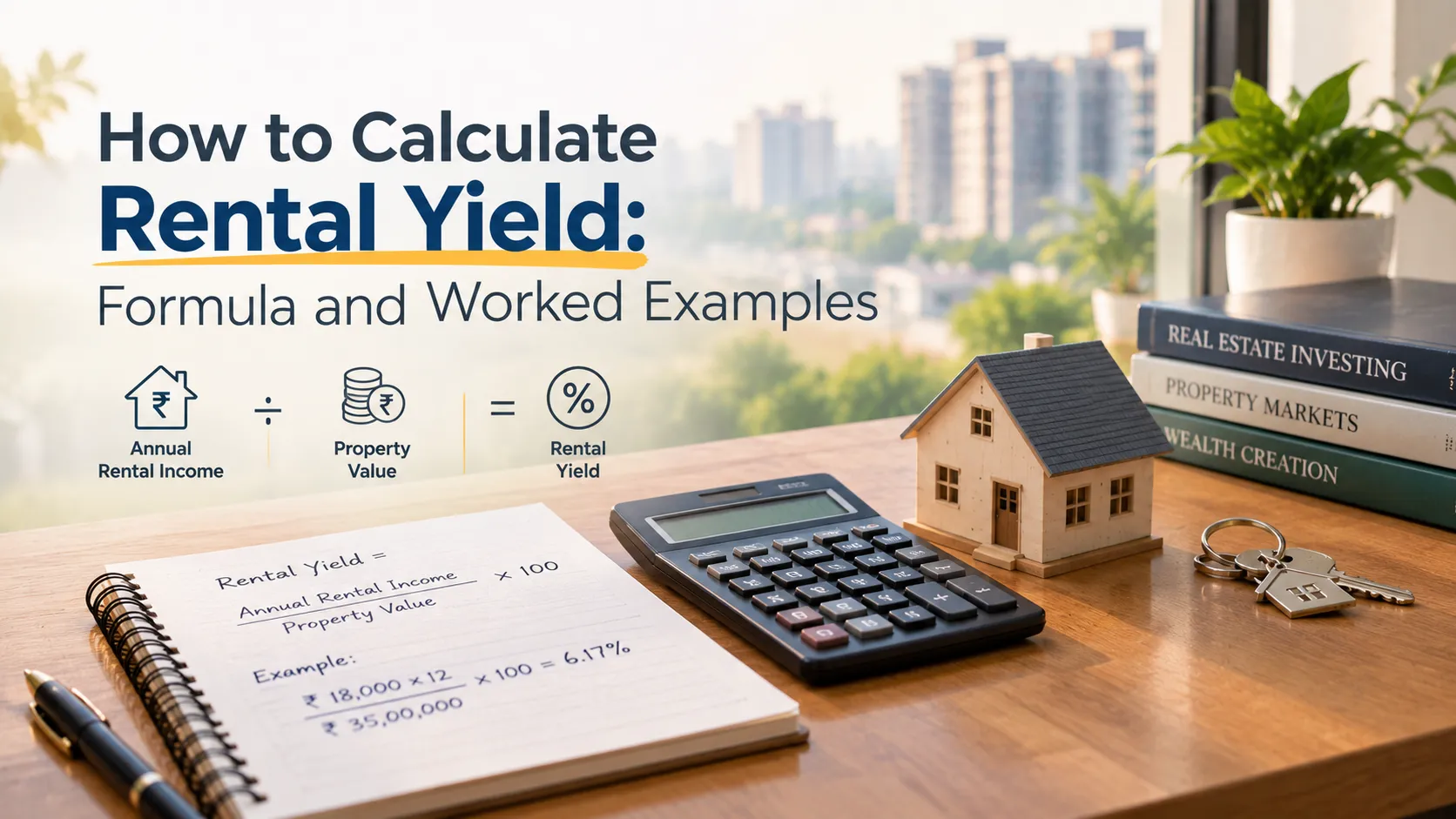
How to Calculate Rental Yield: Formula and Worked Examples

Guides / 26 Sept 2026
How Much Home Loan Can You Get on Your Salary in 2026?
Guides / 25 Sept 2026
10 Things to Check in a Property Sale Deed Before Registration
Checking property ownership online isn't one search; it's three: land records, registration records, and the Encumbrance Certificate, usually on two different portals that don't sync with each other. Here's a state-by-state breakdown of where to check each one, and what a mismatch between them actually means.
Property Ownership Check Online searches almost always start with the wrong assumption: that there's one record, on one portal, that tells you who owns a property. Check Property Ownership Online in India, and you'll find that assumption breaks down fast, most states run land records and property registration on two entirely separate systems that don't automatically sync with each other. Property Ownership Verification, done properly, actually means checking three different things: who owns the land per revenue records, who registered the transaction and when, and whether the property carries any undisclosed loan or mortgage against it. Property Records Online India exist for all three, but rarely on the same website, and almost every guide on this topic treats them as interchangeable.
They aren't. And the gap between them is exactly where property fraud usually hides.
Three Different Records, Not One
Most ownership disputes and fraud cases in India trace back to buyers checking only one of these three records, or checking none at all:
- Land ownership records: Who the revenue department shows as the current owner, held on state land record portals (commonly branded Bhulekh, Bhoomi, Dharani, or similar).
- Registration records: Who registered the sale deed, when, at which Sub-Registrar office, and for what declared value, held on the state's IGRS (Inspector General of Registration and Stamps) portal.
- Encumbrance Certificate (EC): Whether the property has any existing loan, mortgage, or legal claim against it, usually issued through the same registration portal, sometimes as a separate request.
Here's the detail that trips people up most: these two systems, land records and registration, don't always update each other automatically. It's entirely possible for someone to be the legally registered owner of a property while the revenue record still shows the previous owner's name, simply because the mutation (the update to revenue records after a sale) hasn't been processed yet. That gap is normal in a genuine, recent transaction, but it's also exactly the gap a dishonest seller can exploit.
Why Urban Flats Need a Different Search Than Rural Land
This is where a lot of ownership checks go wrong before they even start. Bhulekh-style land record portals are built around rural revenue geography, survey numbers, khasra numbers, village names. Most urban apartments and flats don't carry an actively maintained rural survey number at all. If you search a flat on a land records portal expecting to find ownership details, you'll often come up empty, not because something's wrong, but because you're on the wrong system entirely.
For a flat or apartment, the registration portal (IGRS, or the state's equivalent) is where you need to search instead, using the property's CTS number, Property ID, or the flat number and building name, depending on how the state structures urban records. That search typically returns an Index-II style document, showing the buyer, seller, exact unit details, the declared consideration amount, and the registration date.
State-Wise Portals for Property Ownership Verification
| State | Land Records Portal | Registration / EC Portal |
|---|---|---|
| Uttar Pradesh | UP Bhulekh | IGRSUP |
| Maharashtra | Mahabhulekh (7/12, 8A) | IGR Maharashtra (Index-II) |
| Karnataka | Bhoomi | Kaveri Online Services |
| Telangana | Bhu Bharati | Registration Dept. Telangana |
| Andhra Pradesh | Meebhoomi | IGRS AP |
| Tamil Nadu | eServices TN | TNREGINET |
| Kerala | Ente Bhoomi | Registration Dept. Kerala |
| Punjab / Haryana | Jamabandi | Jamabandi (integrated) |
| Rajasthan | Apna Khata | e-Panjiyan Rajasthan |
| Gujarat | AnyROR | Garvi Gujarat |
| Delhi | Revenue Dept. Delhi | DORIS |
All of this sits under the umbrella of the central Digital India Land Records Modernization Programme (DILRMP), which has pushed most states to digitise records over the past decade, but each state still runs its own portal, its own naming convention, and its own quirks about how far back records go.
How to Actually Run the Search
- Identify the state and confirm rural vs urban. This decides which portal you actually need first.
- For rural or plotted land: go to the state's land records portal, and search by district, tehsil/taluk, village, and survey or khasra number.
- For flats and urban property: go to the state's registration (IGRS) portal instead, and search by CTS number, Property ID, or registration number and year.
- Request the Encumbrance Certificate separately, covering at minimum the last 30 years, to confirm the property isn't carrying an undisclosed mortgage or legal claim.
- Cross-check the names. The owner name on the land record, the registration record, and the person you're negotiating with should all match, or any gap should have a clear, documented explanation.
What a Mismatch or Gap Actually Means
A name mismatch between revenue records and registration records isn't automatically fraud, a recent, genuine buyer whose mutation hasn't been processed yet will show exactly this pattern. What matters is whether there's a paper trail explaining the gap: a registered sale deed, a succession certificate, or a registered Power of Attorney. A seller who can produce none of that, or who gets vague when you ask, is a different situation entirely.
An Encumbrance Certificate showing an active loan or lien the seller didn't disclose upfront is a harder stop. That property isn't fully theirs to sell free and clear until that charge is settled and formally released, regardless of what any sale deed says.
What This Check Doesn't Cover
Even a clean result across land records, registration, and the EC doesn't confirm everything you'd want to know before buying, it doesn't tell you whether the project has valid RERA registration, whether the building plan matches what's actually constructed, or whether there are disputes that haven't yet been formally recorded anywhere searchable. This is exactly why property verification before buying should go beyond an ownership search alone. If you'd rather run ownership, legal status, and builder history checks together in one place instead of stitching together multiple government portals yourself, Avorix Realty's free property verification tool covers all of it in a single search.
The Bottom Line
Checking property ownership online in India isn't one search, it's three: who owns it per revenue records, who registered it and when, and whether it's carrying any hidden charge. Most fraud isn't sophisticated, it survives specifically because buyers check one of these three records, assume that's the whole picture, and stop there. The fifteen minutes it takes to check all three is consistently cheaper than the alternative.
Tags
Tags
Frequently Asked Questions
About the Author
Admin
Top 5 Best Properties in Delhi NCR This Week
Handpicked properties with best price & location
Popular in Greater Noida
Top-rated residential & commercial projects across Greater Noida