
Delhi's ₹6,970 Crore Dwarka Tunnel Project: Which Areas Will Benefit the Most?
Delhi's ₹6,970 Crore Dwarka Tunnel Project: Which Areas Will Benefit the Most?
Categories
- Market Insights
- Guides
- News
Recent Posts
Market Insights / 20 Aug 2026
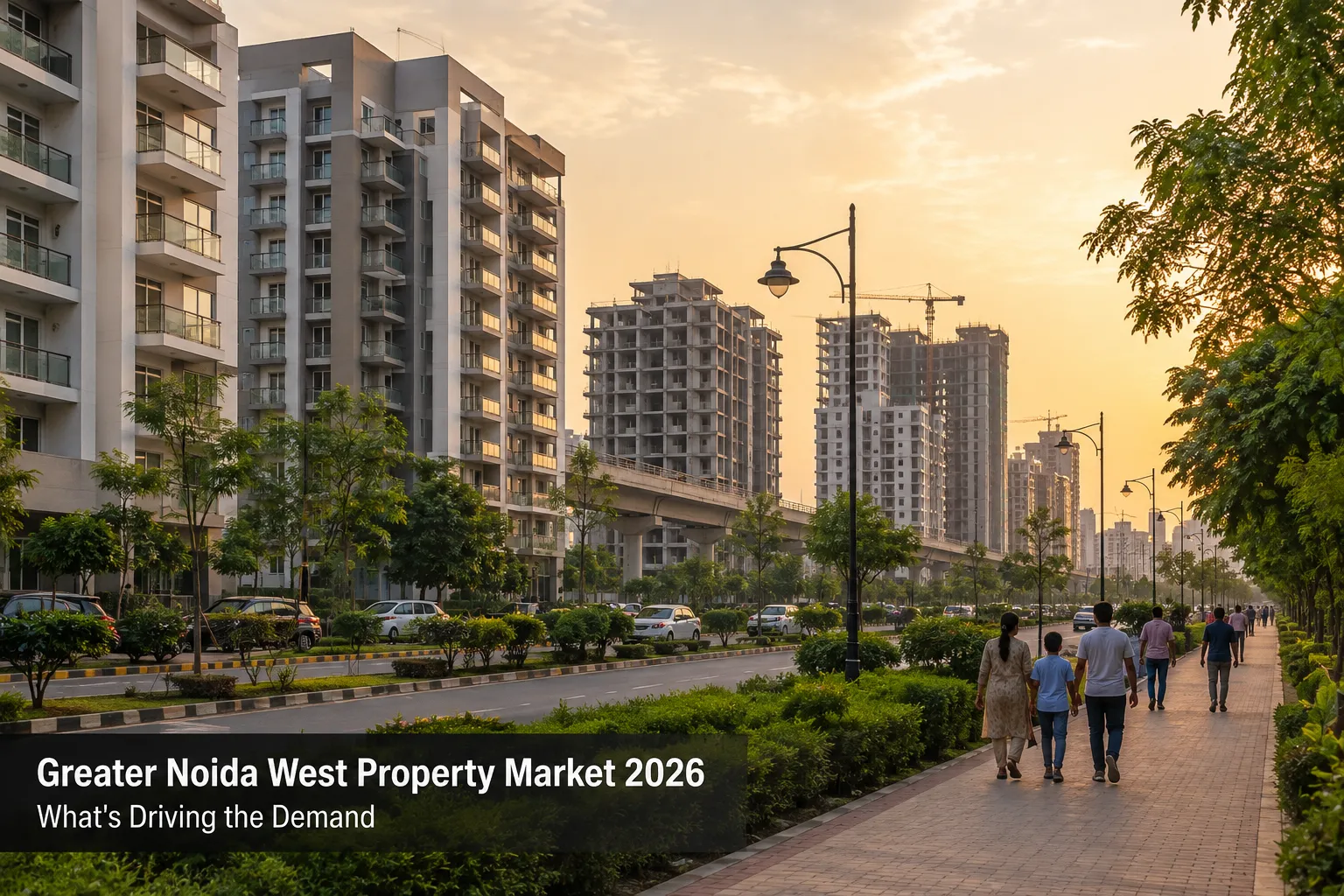
Greater Noida West Property Market 2026: Demand Drivers

Guides / 19 Aug 2026
Khasra Khatauni UP: How to Find and Read Your Land Record Online

News / 17 Aug 2026
YEIDA New Plot Scheme 2026: Plots Near Noida Airport
Market Insights / 14 Aug 2026
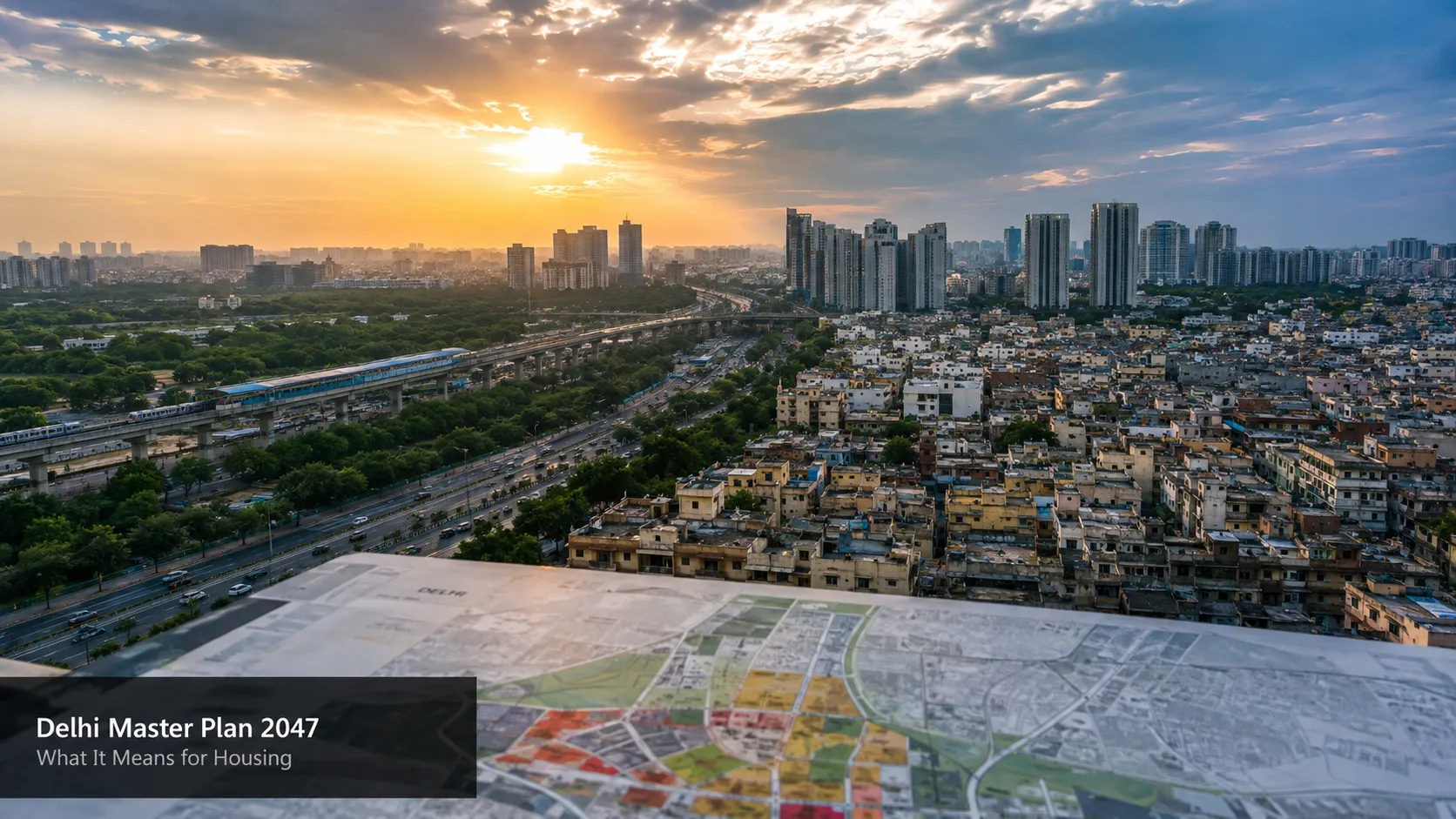
Delhi Master Plan 2047: What It Means for Housing
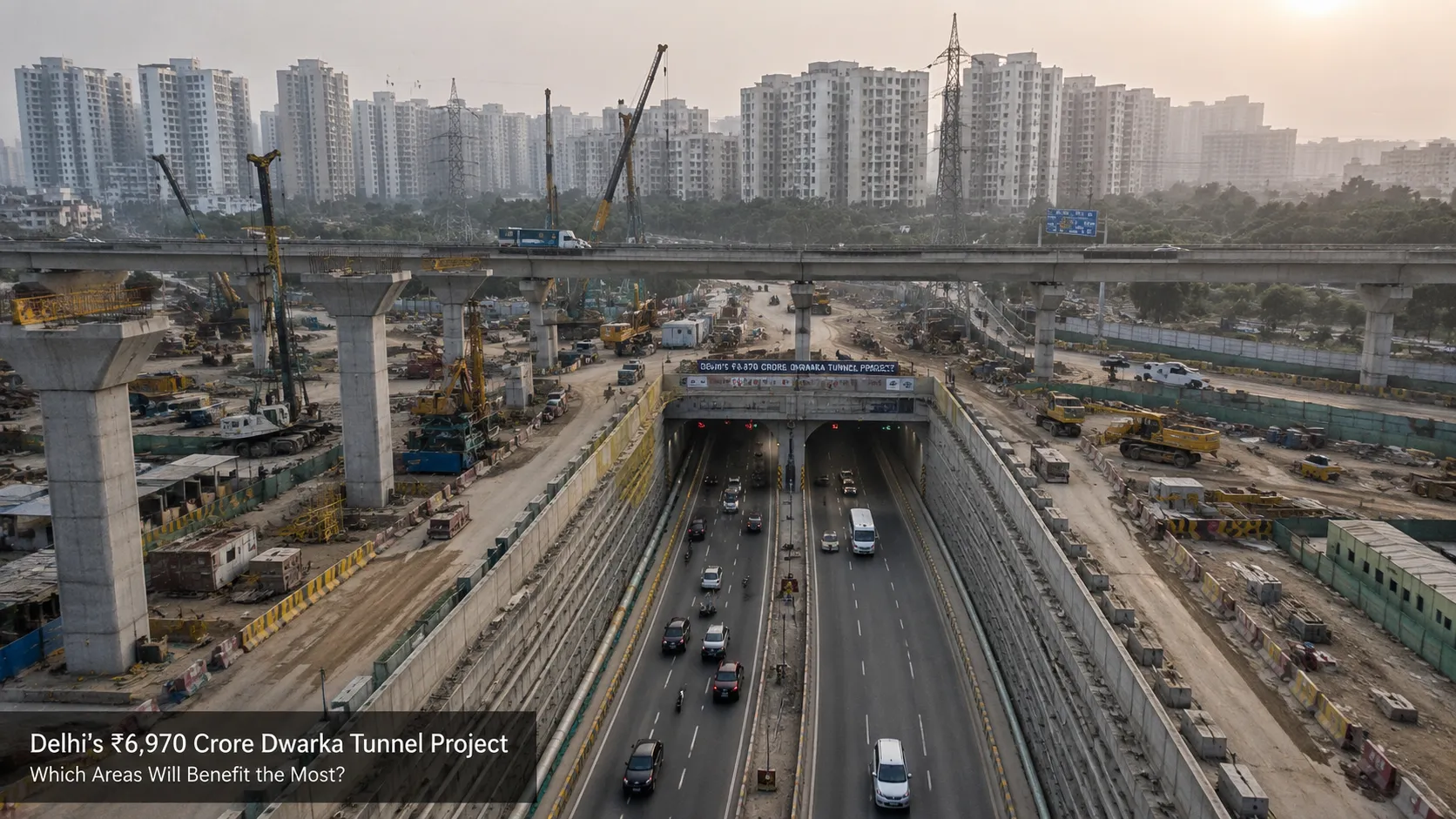
Delhi's ₹6,970 crore Dwarka Tunnel has been approved. Here's what it is, how it works, and which localities are set to gain the most in property value and connectivity.
There are infrastructure announcements, and then there are infrastructure projects that actually change the way a city functions. Delhi's newly approved ₹6,970 crore tunnel falls firmly in the second category.
The Union Cabinet — chaired by Prime Minister Narendra Modi — has given the green light to an 8.1-kilometre, six-lane road tunnel connecting the Dwarka Expressway with Nelson Mandela Marg in Vasant Kunj. The project has been designated NH-148AE and cleared by the Cabinet Committee on Economic Affairs (CCEA). It will be built under the Hybrid Annuity Model, with an expected completion timeline of five years.
For daily commuters, this is welcome news. For property buyers and investors in the corridors this tunnel serves, it's worth paying very close attention.
Table of Contents
- What the Dwarka Tunnel Project Actually Is
- Why This Corridor Needed This Project
- The Broader Infrastructure Picture This Sits Within
- Which Areas Are Likely to Gain the Most
- Dwarka and Its Sectors
- Vasant Kunj and Nelson Mandela Marg
- Mahipalpur and the Airport Periphery
- South Delhi — Saket, Malviya Nagar, AIIMS Belt
- A Real-World Observation: How Infrastructure Reprices a Corridor
- Two Things Buyers Should Be Careful About
- The Bottom Line
What the Dwarka Tunnel Project Actually Is
Let's start with the specifics, because the details matter for understanding who benefits.
The tunnel runs from the Shiv Murti Interchange — where the Dwarka Expressway meets the Delhi border — to Nelson Mandela Marg in Vasant Kunj, South Delhi. The total alignment is 8.1 kilometres, of which 3.14 kilometres passes underground beneath the Southern Ridge forest area using Tunnel Boring Machine (TBM) technology. This underground stretch was specifically designed to avoid disturbing the ecologically sensitive ridge — a geological and environmental constraint that has historically blocked road development in this corridor.
Beyond the tunnel itself, the project includes a 1.8-kilometre elevated road along Nelson Mandela Marg, a new flyover toward Mahipalpur, approach ramps, at-grade roads, and an elevated U-turn.
Once completed, the tunnel will provide faster and signal-free connectivity between Gurugram, Dwarka, IGI Airport, West Delhi, and South Delhi, reducing congestion on key arterial roads while improving access to major residential, commercial, and institutional hubs.
The government estimates the project will generate around 7.54 lakh person-days of direct employment and 9.8 lakh person-days of indirect employment during construction — a useful indicator of the project's economic scale beyond just the road itself.
Why This Corridor Needed This Project
The Mahipalpur-Vasant Kunj road — which currently carries the bulk of traffic between the Dwarka Expressway, IGI Airport, and South Delhi — is one of the most consistently congested stretches in the entire NCR. Expansion has been limited by the Southern Ridge on one side and dense urban development on the other.
The existing Mahipalpur-Vasant Kunj road is already heavily congested and has limited scope for expansion. For commuters travelling from Gurugram, Dwarka, West Delhi, or the airport toward South Delhi's tech and commercial hubs — Saket, Malviya Nagar, the AIIMS corridor — the daily grind through this bottleneck has been a persistent problem with no obvious surface-level solution.
The tunnel solves it by going under the ridge entirely. The project is expected to support around 37,000 passenger car units daily after completion. That's significant throughput for a single corridor, and it reflects just how much pent-up demand exists for a faster east-west link in this part of the city.
The Broader Infrastructure Picture This Sits Within
This tunnel doesn't exist in isolation. It's part of a much larger infrastructure transformation happening across the Dwarka Expressway corridor.
The 29-kilometre Dwarka Expressway is fully operational as of 2026, including a 5.1-kilometre underground tunnel network with a 3.6-kilometre, 8-lane shallow tunnel that bypasses surface congestion entirely. The Delhi section was inaugurated by Prime Minister Modi in August 2025. The airport-link tunnel, connecting the expressway directly to IGI Airport Terminal 3, is now part of the live network — cutting travel time from nearby sectors to the airport to 15 to 20 minutes without a single traffic signal.
Alongside this, the Delhi Metro's Golden Line (Phase IV) runs parallel to the Dwarka Expressway corridor, connecting southern Delhi to IGI Airport, with partial operations targeted for late 2026. The Southern Ridge forest — which the tunnel passes beneath — has historically been one of the biggest obstacles to expanding road infrastructure in this zone. The TBM approach eliminates that constraint without disturbing the forest above.
The new ₹6,970 crore tunnel adds the missing link: a fast, signal-free connection from this entire western corridor into South Delhi's institutional and commercial core. When it's complete, someone living in Gurugram's Sector 102 or Dwarka Sector 21 will be able to reach AIIMS, Saket, or Vasant Kunj without sitting in the Mahipalpur crawl. That's not a marginal improvement — it's a fundamental change in how this part of NCR functions.
Which Areas Are Likely to Gain the Most
Dwarka and Its Sectors
Dwarka was always well-connected to the airport and to central Delhi via the Blue Line. What it lacked was a fast, seamless road link to South Delhi's commercial and institutional hubs without going through Mahipalpur's congestion. The tunnel changes that directly.
Dwarka sectors — particularly those closest to the Shiv Murti interchange, from Sector 21 down through Sector 25 and 26 — are positioned to see demand pickup from professionals working in South Delhi who currently avoid Dwarka because the road commute to Saket or AIIMS is unpredictable. That unpredictability largely disappears when the tunnel is operational.
The Dwarka Expressway has already seen substantial appreciation — approximately 151% price growth over five years according to industry data, and a 58% year-on-year surge in Q4 2024 to Q1 2025, the highest of any residential corridor in India according to CREDAI-Colliers-Liases Foras data. The tunnel extends the connectivity story further into a corridor that's already performing.
Vasant Kunj and Nelson Mandela Marg
The Nelson Mandela Marg end of the tunnel — where the elevated road and new infrastructure land in Vasant Kunj — is the other obvious beneficiary. Vasant Kunj already commands premium pricing for its South Delhi address, airport proximity, and DDA flat stock. A direct, signal-free tunnel connection to the Dwarka Expressway and Gurugram adds a new dimension to its connectivity profile.
Properties on the Vasant Kunj side that currently suffer from the Mahipalpur bottleneck will become more liquid — easier to rent, easier to sell, and easier to justify a premium on. Buyer profiles that previously chose other South Delhi localities over Vasant Kunj because of the western approach traffic issue will have one fewer reason to look elsewhere.
Mahipalpur and the Airport Periphery
Mahipalpur sits right at the junction where the tunnel originates. It's currently one of the more congested and commercially dense zones in this corridor — a mix of budget hotels, service industries, and mid-segment residential stock that serves airport-adjacent demand. The tunnel's construction will bring significant development activity to this zone. Post-completion, the reduction in through-traffic will also change the character of the area's street-level environment, which tends to make peripheral residential pockets more attractive.
South Delhi — Saket, Malviya Nagar, AIIMS Belt
These localities don't need the tunnel to be desirable — they already are. But the tunnel changes their catchment. Buyers and renters from Gurugram, Dwarka, and West Delhi who currently rule out South Delhi because the road commute in both directions is unpredictable will find the equation shifting. That expanded buyer pool, entering localities where supply is already structurally constrained, tends to firm up prices rather than dramatically spike them — but the direction is clear.
A Real-World Observation: How Infrastructure Reprices a Corridor
The pattern with major Delhi NCR infrastructure projects is consistent and worth understanding. When a significant road or metro project is announced with credible backing — Cabinet approval, clear funding, confirmed timeline — asking prices in the directly affected localities start moving within six to twelve months. By the time the asset is operational, a significant portion of the appreciation has already occurred.
This happened with the Gurugram stretch of the Dwarka Expressway when it opened in 2022. It happened again when the Delhi section and airport tunnel opened in August 2025. The pattern repeats: a corridor is announced, inventory re-rates on expectation, and a second wave of appreciation follows once the asset is operational and travel times genuinely drop.
The ₹6,970 crore tunnel was approved in late June 2026. The five-year completion timeline means operational status around 2031. Buyers who understand this cycle — and act during the early announcement phase rather than waiting for completion — have historically captured the larger portion of the appreciation window.
Two Things Buyers Should Be Careful About
Don't Treat the Timeline as Fixed
Large infrastructure projects in India have a history of delay. The Dwarka Expressway itself was originally planned for completion in 2012 and finally became fully operational in 2025 — more than a decade later. Five years for this tunnel is the official estimate. Plan for six to eight. Buying with a three-year flip in mind on the back of this announcement is a risk.
Not All Localities Along the Route Benefit Equally
The tunnel's impact will be most concentrated at both ends — Shiv Murti/Mahipalpur and Vasant Kunj/Nelson Mandela Marg — and for localities that have a direct, logical travel pattern through this corridor. Areas that are technically adjacent but don't fit naturally into the commute flow will see indirect and more modest benefits.
The Bottom Line
The ₹6,970 crore Dwarka Tunnel is one of the more significant infrastructure approvals for Delhi in recent years. It solves a real, documented problem — the Mahipalpur bottleneck — with a technically credible solution that has already cleared environmental review and geological assessment. Cabinet approval with confirmed funding and a defined implementation model puts this firmly above the "announcement" stage.
For property buyers evaluating Dwarka, Vasant Kunj, Mahipalpur, and the South Delhi institutional corridor, the tunnel adds a meaningful new connectivity argument to localities that already have strong fundamentals. The window between approval and completion is typically when the market prices in the expectation — steadily, not overnight.
Evaluating property in the Dwarka Expressway corridor or South Delhi and want to understand how this infrastructure shift affects specific localities and price points? Speak with a local expert who tracks this market at the micro-level — not just the headline announcement. That ground-level read is what separates a well-timed decision from one made purely on news cycle enthusiasm. #PropertyKaDNA
Tags
Tags
Frequently Asked Questions
Top 5 Best Properties in Delhi NCR This Week
Handpicked properties with best price & location
Popular in Greater Noida
Top-rated residential & commercial projects across Greater Noida