
Gift Deed Stamp Duty in UP: Rates and Blood Relation Rules
Categories
- Tips
- Guides
- Market Insights
- Articles
Recent Posts

Tips / 28 Sept 2026
How to Check Whether a Plot of Land Is Legally Safe to Buy
Guides / 28 Sept 2026
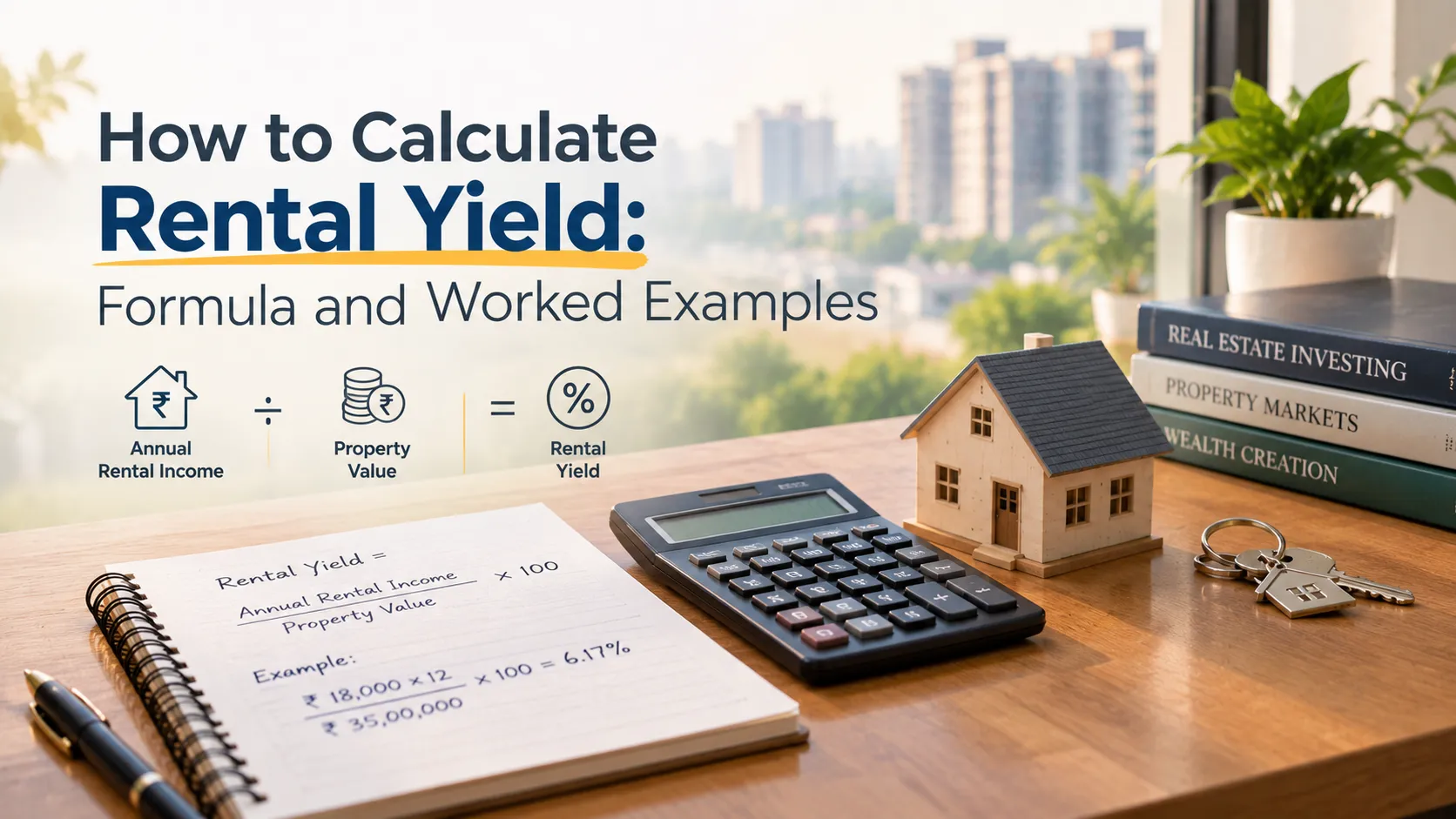
How to Calculate Rental Yield: Formula and Worked Examples

Guides / 26 Sept 2026
How Much Home Loan Can You Get on Your Salary in 2026?

Guides / 25 Sept 2026
10 Things to Check in a Property Sale Deed Before Registration
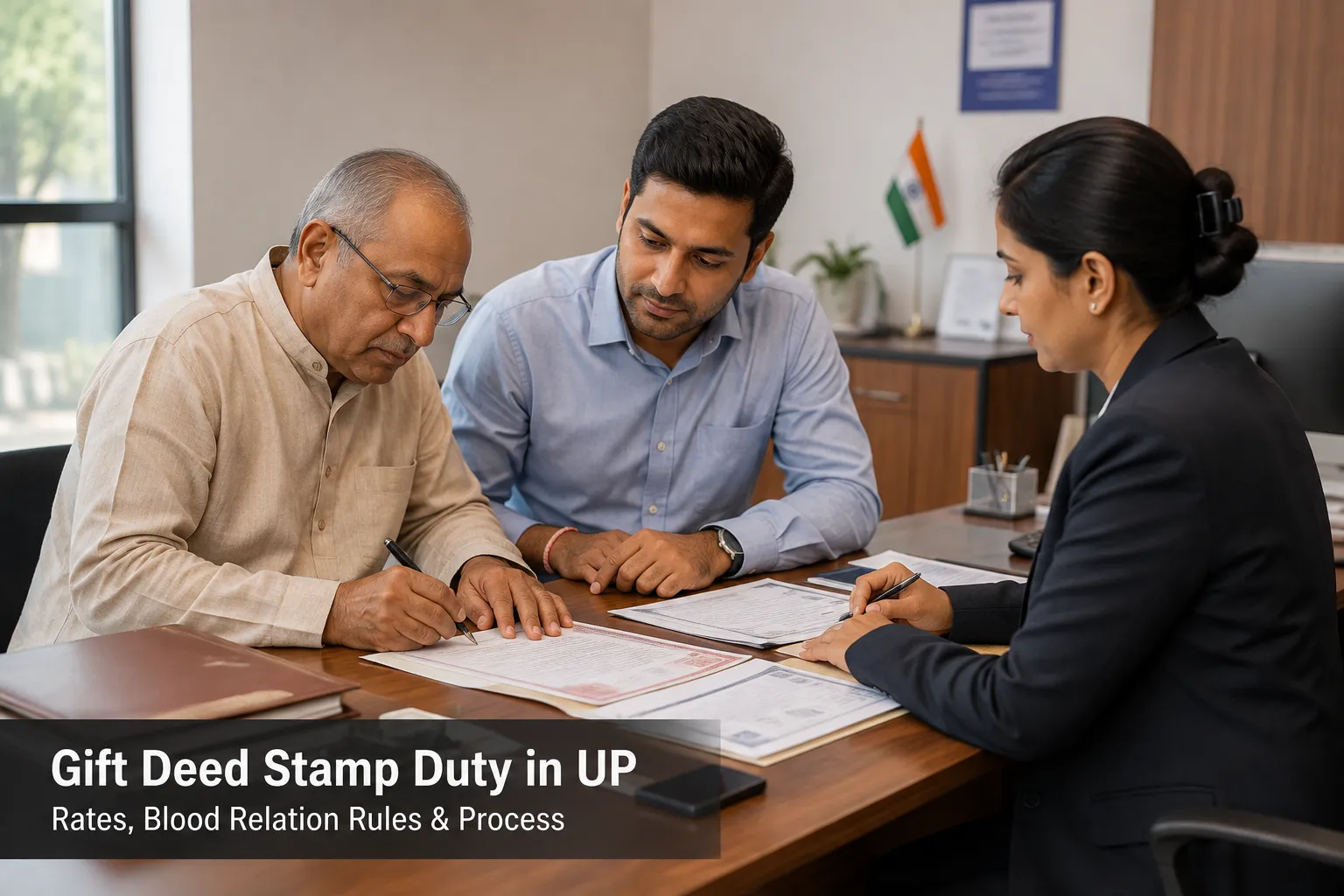
Gift deed stamp duty in UP swings between a flat Rs 5,000 for blood relatives and a full 7% market-value rate for everyone else, a gap that can run into lakhs. Here's exactly who qualifies, the step-by-step registration process, and the tax angle most families overlook.
Gift Deed Stamp Duty in UP works very differently depending on one thing: who you're gifting the property to. A Gift Deed in Uttar Pradesh between a parent and child costs a small fraction of what the same transfer would cost between unrelated parties, and understanding exactly where that line sits is the difference between a ₹5,000 transaction and one running into lakhs. UP Gift Deed Rules build in a genuine concession for family transfers, but the eligibility and process still need to be followed precisely, an unregistered or improperly executed gift deed carries no legal weight at all.
This guide covers Gift Deed Registration in UP end to end: the rates, exactly who qualifies as a blood relative, the step-by-step process, and the tax angle most people overlook.
Table of Contents
- What Is a Gift Deed, and Why Registration Is Non-Negotiable
- Gift Deed Stamp Duty in UP: The Two Rates That Matter
- Who Counts as a "Blood Relative" Under UP's Concession?
- Worked Example: Blood Relative vs Non-Relative
- Step-by-Step: How to Register a Gift Deed in UP
- Documents You'll Need
- Income Tax on Gifted Property: What You Should Know
- Common Mistakes People Make
- The Bottom Line
What Is a Gift Deed, and Why Registration Is Non-Negotiable
A gift deed is a legal document that transfers ownership of property from one person (the donor) to another (the donee) voluntarily, out of love and affection, with no money changing hands. It sounds simple, but under Section 17(1)(a) of the Registration Act, 1908, registering a gift deed for immovable property is compulsory. An unregistered gift deed creates no legal title in the donee whatsoever, it's not a lesser version of a valid transfer, it's legally meaningless.
That single fact is worth repeating because it trips people up more than any other part of this process: verbally agreeing to "give" someone a property, or even having a signed but unregistered document, does not transfer ownership under Indian law.
Gift Deed Stamp Duty in UP: General Gift Deed vs. Family Transfers
Uttar Pradesh applies two very different stamp duty structures depending on the relationship between donor and donee.
| Transfer Type | Stamp Duty | Registration Charge |
|---|---|---|
| General (Gift to a non-blood relative) | 7% of the property's market value (same as a standard sale deed) | 1% of market value |
| Family Transfer (Gift to a blood relative) | Flat ₹5,000, plus ₹1,000 processing fee | Capped at ₹20,000 |
That gap is enormous, and it's entirely deliberate. UP, like many states, uses a steeply concessional gift deed rate to encourage family property transfers to happen through proper, registered legal channels rather than informal arrangements that create disputes later. Stamp duty is always calculated on whichever is higher: the declared value or the government-notified circle rate for that locality, the same rule that applies to standard sale deeds.
Eligible"Blood Relative" Under UP's Concession?
The concessional rate applies specifically to transfers between: spouse, children, parents, siblings, grandparents, and grandchildren. This is a defined list, not a general "family" category, and it's worth confirming your specific relationship falls within it before assuming the flat ₹5,000 rate applies. Extended relatives like uncles, aunts, cousins, or in-laws generally do not qualify for this concession and would fall under the standard 7% rate applicable to non-blood relatives.
Worked Example: Blood Relative vs Non-Relative
Take a property in UP valued at ₹50 lakh under the applicable circle rate.
Gifted to a blood relative (e.g., father to daughter): ₹5,000 stamp duty + ₹1,000 processing fee + registration capped at ₹20,000 = approximately ₹26,000 total
Gifted to a non-blood relative: 7% of ₹50 lakh = ₹3.5 lakh stamp duty + 1% (₹50,000) registration = ₹4 lakh total
The difference here is roughly ₹3.74 lakh on a mid-sized property, which is exactly why confirming eligibility for the blood-relative concession before drafting the deed matters so much. Getting this wrong, or structuring a transfer incorrectly, is an expensive mistake to discover after the fact.
Registeration Charges for a Gift Deed in UP
- Draft the gift deed. It must clearly state the donor's intent to transfer the property voluntarily, out of love and affection, with no consideration involved, along with full details of both parties and the property.
- Calculate the applicable stamp duty using the Avorix stamp duty calculator to confirm whether the blood-relative concession applies and get an accurate estimate before proceeding.
- Pay the stamp duty and registration fee online through the official IGRS UP portal, and book an appointment slot at the Sub-Registrar office with jurisdiction over the property's location.
- Appear in person on the appointment date. Both the donor and donee, along with two witnesses, must be physically present at the Sub-Registrar's office.
- Complete biometric verification. All signatories undergo Aadhaar-based biometric verification, including fingerprint and photograph capture.
- Document review and registration. The Sub-Registrar verifies the deed, confirms stamp duty payment, and registers the document.
- Collect the registered gift deed. You'll receive a digitally signed, certified copy, usually within a few working days, downloadable through the portal using your application number.
Documents You'll Need
- Original property documents (previous sale deed, title documents)
- Aadhaar card and PAN card for both donor and donee
- Passport-size photographs of donor, donee, and both witnesses
- Proof of relationship, particularly important when claiming the blood-relative concession
- Society or builder NOC, if applicable, the same requirement that applies to a standard sale
- Latest property tax receipt and encumbrance certificate
Income Tax on Gifted Property: What You Should Know
Under Section 56(2)(x) of the Income Tax Act, gifts of property received from a "relative", a definition that includes spouse, siblings, and lineal ascendants/descendants, are fully exempt from income tax in the donee's hands, regardless of the property's value. Gifts received from someone who doesn't qualify as a relative under this definition are taxable if the value exceeds ₹50,000 in a financial year.
Note that the Income Tax Act's definition of "relative" is broader than UP's stamp duty concession list in some respects, so it's worth checking both definitions separately, qualifying for income tax exemption doesn't automatically mean you qualify for the concessional stamp duty rate, and vice versa.
Common Mistakes People Make
- Assuming an unregistered gift deed is still valid. It isn't. No registration means no legal transfer of title, full stop.
- Missing the blood-relative concession. Families sometimes default to drafting a standard sale deed or paying the full 7% rate simply because they weren't aware the flat ₹5,000 rate applied to their relationship.
- Skipping the society or builder NOC. This requirement applies to gift deeds just as it does to sale transactions, and skipping it can hold up registration.
- Confusing the stamp duty concession with automatic income tax exemption. They're governed by separate laws with separate definitions of "relative", verify both independently.
The Bottom Line
Gift deed stamp duty in UP offers a genuinely significant concession for family transfers, a flat ₹5,000 versus a full 7% market-value rate, but only if you confirm the relationship qualifies and follow the registration process correctly. Given the scale of the potential savings, and the fact that an unregistered gift deed has zero legal standing, this is a process worth getting right the first time rather than assuming informal understanding is enough.
Planning to transfer property to a family member and want help confirming eligibility and calculating the exact cost? Book a site visit with us and we'll walk you through the paperwork properly. #PropertyKaDNA
Tags
Tags
Frequently Asked Questions
About the Author
Admin
Top 5 Best Properties in Delhi NCR This Week
Handpicked properties with best price & location
Popular in Greater Noida
Top-rated residential & commercial projects across Greater Noida