
How to Buy Your First Home Without the Financial Heartbreak

Categories
- News
- Market Insights
- Tips
Recent Posts

News / 22 Sept 2026
New Noida Land Acquisition 2026: List of 37 Villages in Phase 1
Market Insights / 21 Sept 2026
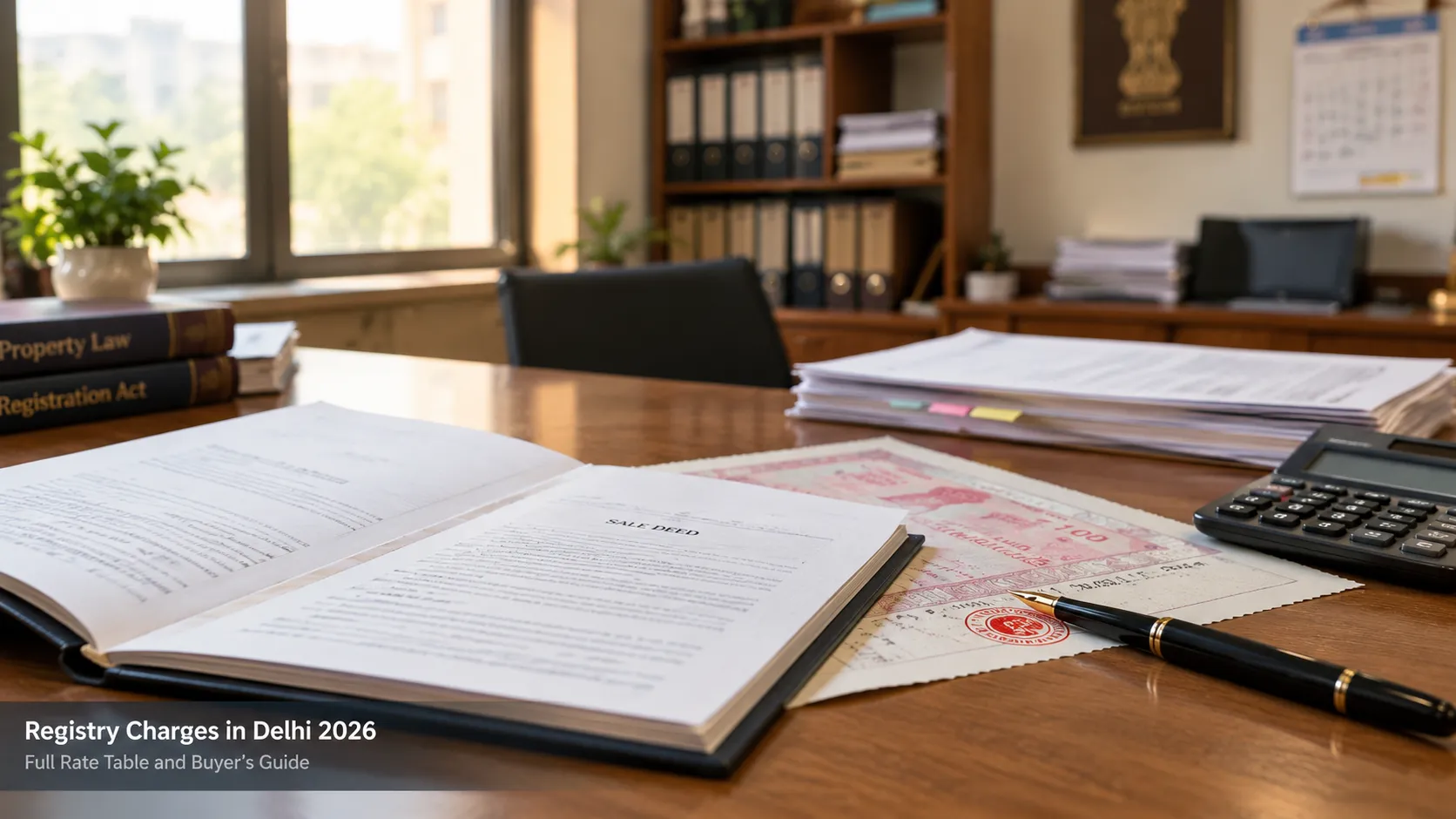
Registry Charges in Delhi 2026: Full Rate Table & Guide

News / 21 Sept 2026
8 Best Property Hotspots in NCR: Where to Actually Buy

Market Insights / 19 Sept 2026
Cost Inflation Index 2026: Full Table and How to Apply It
Your first home in Delhi NCR will be the biggest financial decision of your life — and the most expensive mistakes happen in the first two weeks. Here's how to get it right from the start.
Buying your first home in a powerhouse market like Noida or Gurgaon isn't just about picking a pretty balcony. It's a high-stakes chess match involving your life savings, bank policies, and government regulations. One wrong move—like skipping a document check or miscalculating your budget—can turn your dream into a decade-long headache.
At Avorix Realty, we've seen the "just looking" phase turn into "I'm overwhelmed" very quickly. To help you stay in control, we've expanded our exclusive homebuyer's roadmap into a detailed guide. Here is exactly how to navigate the Delhi NCR real estate jungle from start to finish.
Table of Contents
Phase 1: The "Financial Foundation" (Weeks 1-2)
Most people start by looking at houses. Don't do that. Start by looking at your bank account.
- The 20% Reality: While banks fund a large portion of the property, you need a "war chest" for the down payment. In premium Delhi NCR projects, this is usually 20%.
- The "Invisible" 10%: Beyond the property price, keep an extra 8-10% of the total value aside. This covers Stamp Duty, Registration charges, GST (for under-construction homes), and the inevitable "moving-in" costs.
- The Pre-Approval Edge: Before you visit a single site, get a pre-approval letter from your bank. In competitive areas like Sector 150 Noida or Gurgaon's Golf Course Extension, sellers prioritize buyers who have their "funding ready."
Expert Tip: Not sure how much the government takes? Use our Stamp Duty Calculator to get an exact figure for Delhi, UP, or Haryana.
Phase 2: The "Shortlist & Scout" (Weeks 3-6)
Once you know your budget, the hunt begins. But remember: a house is more than four walls; it's a neighborhood.
- Connectivity vs. Cost: A cheaper flat in a remote corner of Greater Noida might seem like a steal, but the fuel costs and commute time to your office in Cyber City will eat those savings in two years.
-
The "Three-Visit Rule": Visit your shortlisted property at three different times:
- Morning: To check natural light and traffic noise.
- Evening: To see how the neighborhood feels after dark.
- Monsoon (if possible): To check for waterlogging or seepage issues.
- RERA is Your Shield: Never, ever invest in a project that isn't RERA-registered. At Avorix Realty, we verify the RERA credentials of every project before we even show it to you.
Phase 3: The "Deep Dive" Due Diligence (Weeks 7-8)
You've found "The One." Now, it's time to play detective. This is where most first-time buyers get nervous, but it's actually the most empowering part of the process.
- The Title Search: Ensure the "Chain of Documents" is complete. You need to know who owned the land before the builder and if all previous transfers were legal.
- The OC/CC Check: For ready-to-move-in flats, an Occupancy Certificate (OC) is mandatory. Without it, your building is technically "unfit for habitation," and getting a water or power connection can be a nightmare.
- Maintenance & Hidden Dues: Check if the previous owner (in resale) or the builder has any outstanding dues with the local authority (like Noida Authority or HUDA).
Phase 4: Closing the Deal (Weeks 9-10)
The finish line is in sight!
- The Negotiation: Don't just negotiate on the price. Ask for "add-ons" like covered parking, club memberships, or interior vouchers.
- The Sale Agreement: Read every word. Ensure the "Date of Possession" and "Penalty Clauses" are clearly mentioned.
- The Registration: This happens at the Sub-Registrar's office. Once the stamp duty is paid and the biometrics are done, you are officially a homeowner.
Your Legacy Starts with Avorix Realty
Buying a home is the biggest financial commitment of your life. You shouldn't do it alone. At Avorix Realty, we don't just find you a house; we secure your future. From technical site audits to the final "key handover," we are your partners in this journey.
Ready to stop scrolling and start owning? Connect with Avorix Realty today for an expert consultation on the best properties in Delhi NCR.
Frequently Asked Questions
Tags
No tags
Tags
No tags
Top 5 Best Properties in Delhi NCR This Week
Handpicked properties with best price & location
Popular in Greater Noida
Top-rated residential & commercial projects across Greater Noida