
Noida Outpaces Bengaluru, Gurugram: Prices Up 111% check
Noida Outpaces Bengaluru, Gurugram: Prices Up 111% check
Categories
- Tips
- News
- Articles
- Guides
- Market Insights
Recent Posts

Tips / 17 Sept 2026
Rent vs Buy in India 2026: Which Makes More Financial Sense?

News / 17 Sept 2026
Greater Noida Connectivity 2026: Key Infrastructure Developments
Articles / 16 Sept 2026
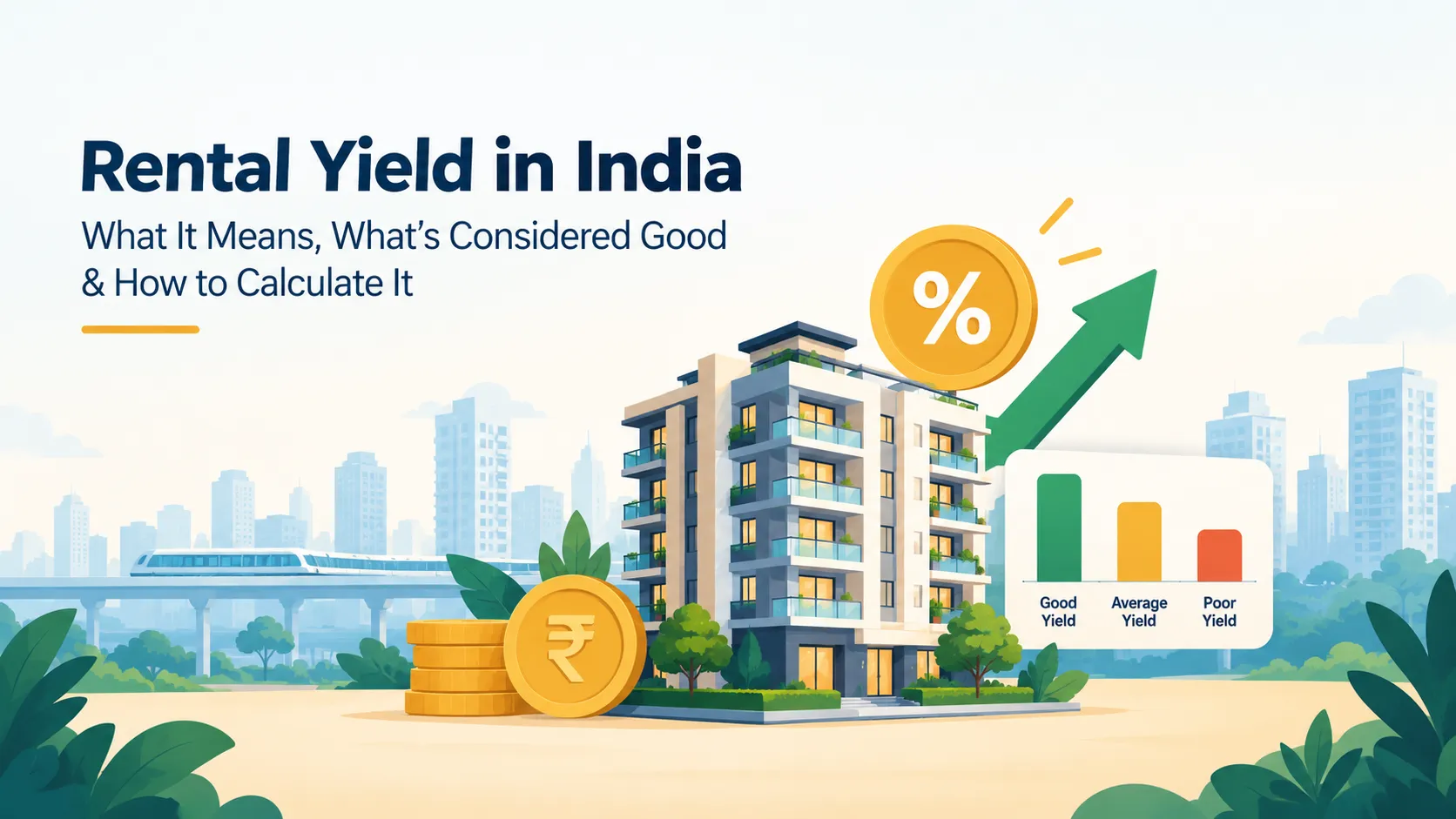
What Counts as a Good Rental Yield in India?

Guides / 16 Sept 2026
Prepay or Extend: Cut Your Home Loan EMI or Tenure?
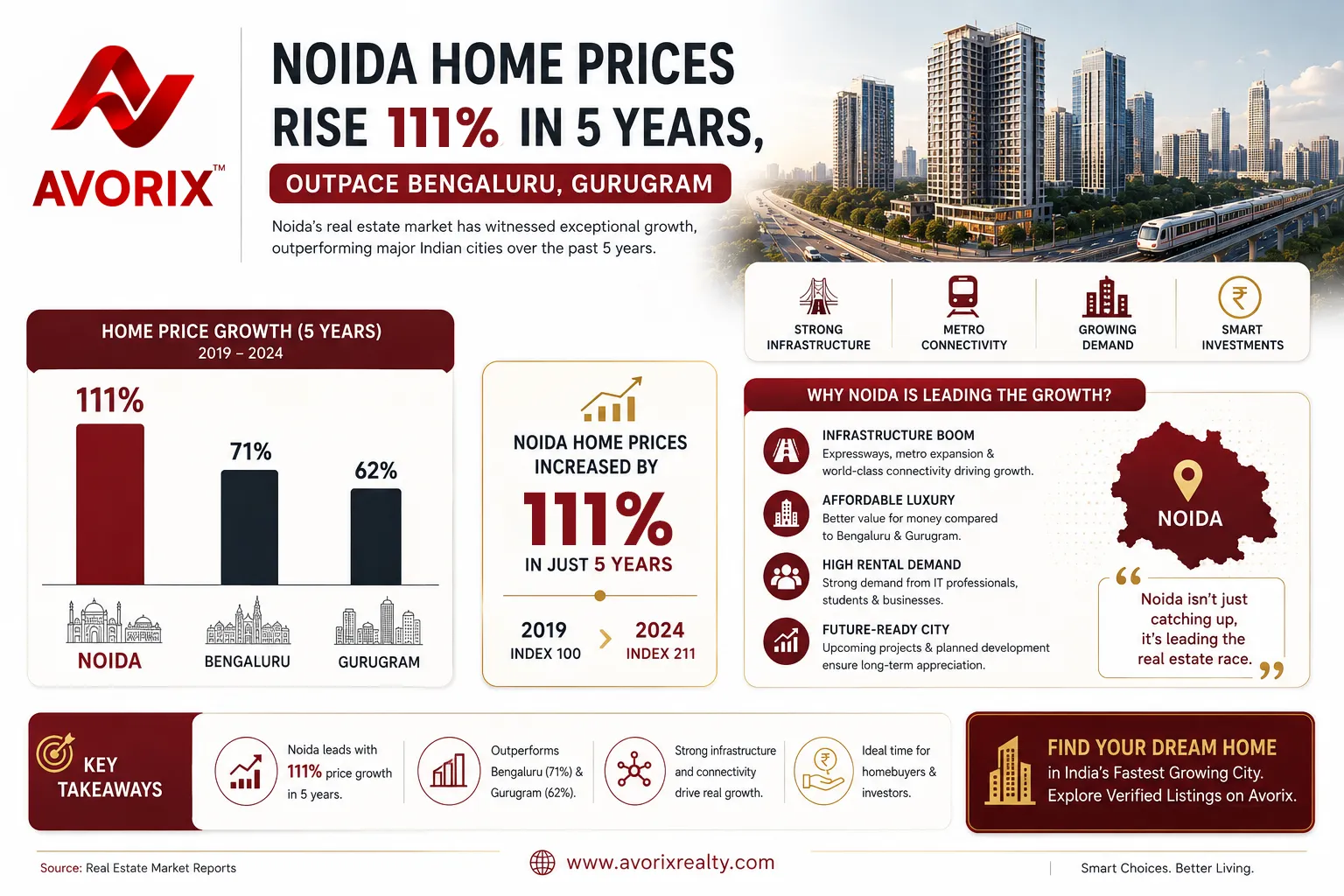
Noida home prices climbed 111% in five years, from ₹6,300 to ₹13,300 per sq ft, outpacing Bengaluru and staying neck-and-neck with Gurugram. Here's what's actually driving the growth, and whether the market is still worth entering.
Noida home prices have done something few NCR watchers would have confidently predicted five years ago: they've outgrown Bengaluru's tech-driven boom and Gurugram's corporate-corridor premium. Noida property prices climbed roughly 111% between 2020 and 2025, from an average of around ₹6,300 per sq. ft. to approximately ₹13,300 per sq. ft., according to the latest ANAROCK research. That makes Noida's real estate market the fastest-appreciating among the major cities the report tracked, ahead of both Bengaluru and Gurugram over the same window.
This kind of Noida property price growth doesn't happen by accident, and it's worth unpacking properly rather than treating it as just another headline statistic. Here's what's actually behind the number, and what it means for anyone buying, holding, or considering an exit in this market.
Table of Contents
What Does the Data Actually Show?
Per ANAROCK Research's latest study of 11 major residential markets, Noida delivered the strongest capital appreciation among all cities tracked, with a companion long-horizon data set showing average prices more than doubling from ₹4,795 per sq. ft. in 2019 to ₹10,780 per sq. ft. by Q2 2026, a 125% rise. Within that broader window, the specific 2020-2025 stretch saw Noida prices move from roughly ₹6,300 to ₹13,300 per sq. ft., a 111% increase that outpaced both Bengaluru and Gurugram over the same five-year period.
Noida price growth (2020-2025): ~111%, from ₹6,300 to ₹13,300 per sq. ft.
Gurugram, same broader window: ~117% growth, from ₹6,150 to ₹13,350 per sq. ft.
Noida rental yield: Improved from 3.2% to 3.9% over the longer 2019-2026 window
Worth noting: Gurugram's own appreciation has been close behind Noida's in the broader dataset, so the real story here isn't just "Noida beat Gurugram", it's that both NCR markets have decisively outpaced Bengaluru and several other major Indian cities over this period, with Noida edging ahead in the specific five-year window most recently reported.
Why Did Noida Outpace Bengaluru and Gurugram Specifically?
ANAROCK's own analysis points to a consistent set of drivers: expanding Global Capability Centres, a strengthening employment ecosystem, and sustained migration into the city, all reinforcing housing demand at the same time. We'd add Noida's specific infrastructure timeline to that list. The Noida-Greater Noida Expressway corridor, metro extension, and the transition of Noida International Airport at Jewar from a long-promised project to an operational reality have collectively done something Bengaluru's more piecemeal infrastructure story hasn't matched at the same pace: converted a genuine connectivity upgrade into sustained buyer confidence within a compressed five-year window.
Gurugram's strong showing in the same data isn't a coincidence either, both cities have benefited from the same broader NCR dynamic: corporate employment growth, GCC expansion, and buyers increasingly viewing well-connected NCR corridors as genuine long-term addresses rather than transitional stops.
Where Did the Growth Concentrate?
Noida's price growth hasn't been uniform across every sector, and understanding where it concentrated matters more than the headline city-wide average. Micro-market data from Noida Sector 150 has previously shown capital values rising as much as 128% over a shorter window, comfortably outpacing the corresponding rental growth in the same pocket, evidence that specific, well-planned sectors with strong infrastructure access have driven a disproportionate share of the city-wide number.
This is a useful reminder for anyone reading a single city-wide statistic: the 111% figure is a blended average. Established, well-connected sectors have likely appreciated faster than newer or less-developed pockets still waiting on their own infrastructure delivery.
Rental Yields: The Other Half of the Story
What makes this data genuinely interesting, rather than just another price-appreciation headline, is that Noida's rental yields improved alongside capital values rather than being squeezed by them. Yields moved from roughly 3.2% to 3.9% over the broader tracked period, a meaningful improvement that runs against the usual pattern where rising prices simply erode rental returns.
ANAROCK's own framing is worth repeating here: rising property prices are typically inversely proportional to rental yields, so a market where both are climbing together is unusual, and arguably healthier, than one where appreciation is happening purely on the back of speculative capital with no matching rental demand behind it.
Does This Mean Noida Is Now Overpriced?
Not necessarily, and this is where we'd push back on a purely headline-driven read of the data. A 111% five-year gain sounds dramatic in isolation, but Gurugram posted comparable growth over a similar window, and the underlying demand drivers, GCC expansion, employment growth, migration, genuine infrastructure delivery, remain intact rather than showing signs of exhaustion. Rental yields improving alongside prices is also a meaningfully different signal than pure speculative appreciation would produce.
That said, "not overpriced at the city level" doesn't mean every sector or project is fairly valued. The sectors that led this run, generally the ones closest to completed infrastructure, are the ones where a buyer needs to look hardest at whether the price already reflects the full infrastructure story, versus sectors still catching up where more of that appreciation may still be ahead.
What This Means If You're Buying in Noida Right Now
For end-users, this data is reassurance that Noida's fundamentals, not just its marketing, have been driving genuine value creation over the past five years. For investors specifically chasing appreciation, the more interesting question going forward isn't whether Noida as a whole keeps climbing at 111% every five years, that pace is unlikely to repeat exactly, it's which specific sectors still have infrastructure catch-up ahead of them rather than already priced in behind them.
Corridors near Noida International Airport, ongoing metro expansion zones, and Greater Noida West's improving connectivity remain the pockets where we'd expect the next leg of appreciation to concentrate, rather than the already fully-priced, established sectors that led this particular five-year cycle.
The Bottom Line
Noida's real estate market has genuinely outperformed Bengaluru and kept pace with, or in this specific window edged past, Gurugram over the last five years, and the data suggests this is being driven by real infrastructure delivery and employment growth rather than pure speculation. For anyone weighing Noida against other major Indian cities as an investment destination, this is one of the clearest data points yet that the city's fundamentals have caught up with, and in some respects overtaken, markets that have historically commanded more attention.
Want to know which specific Noida sectors still have room to run versus which have already priced in this five-year rally? Book a site visit with us and we'll walk you through the numbers sector by sector. #PropertyKaDNA
Tags
Tags
Frequently Asked Questions
Top 5 Best Properties in Delhi NCR This Week
Handpicked properties with best price & location
Popular in Greater Noida
Top-rated residential & commercial projects across Greater Noida