Tier 1 vs Tier 2 Cities: Best Real Estate Investment Guide 2024
Tier 1 vs Tier 2 Cities: Best Real Estate Investment Guide 2024
Categories
- Articles
- Market Insights
- News
Recent Posts

Articles / 07 Sept 2026
How to Check Property Registry Online in UP (Free)

Market Insights / 04 Sept 2026
Noida Circle Rates 2026: Sector-Wise Complete List

Market Insights / 02 Sept 2026
Best Home Loan Rates in India 2026: Full Comparison

Articles / 01 Sept 2026
Free Property Verification: Check Before You Invest
Stuck between a metro flat and a small-town plot? Our expert guide compares Tier 1 and Tier 2 cities in India to reveal where your money will grow faster and safer in 2024.
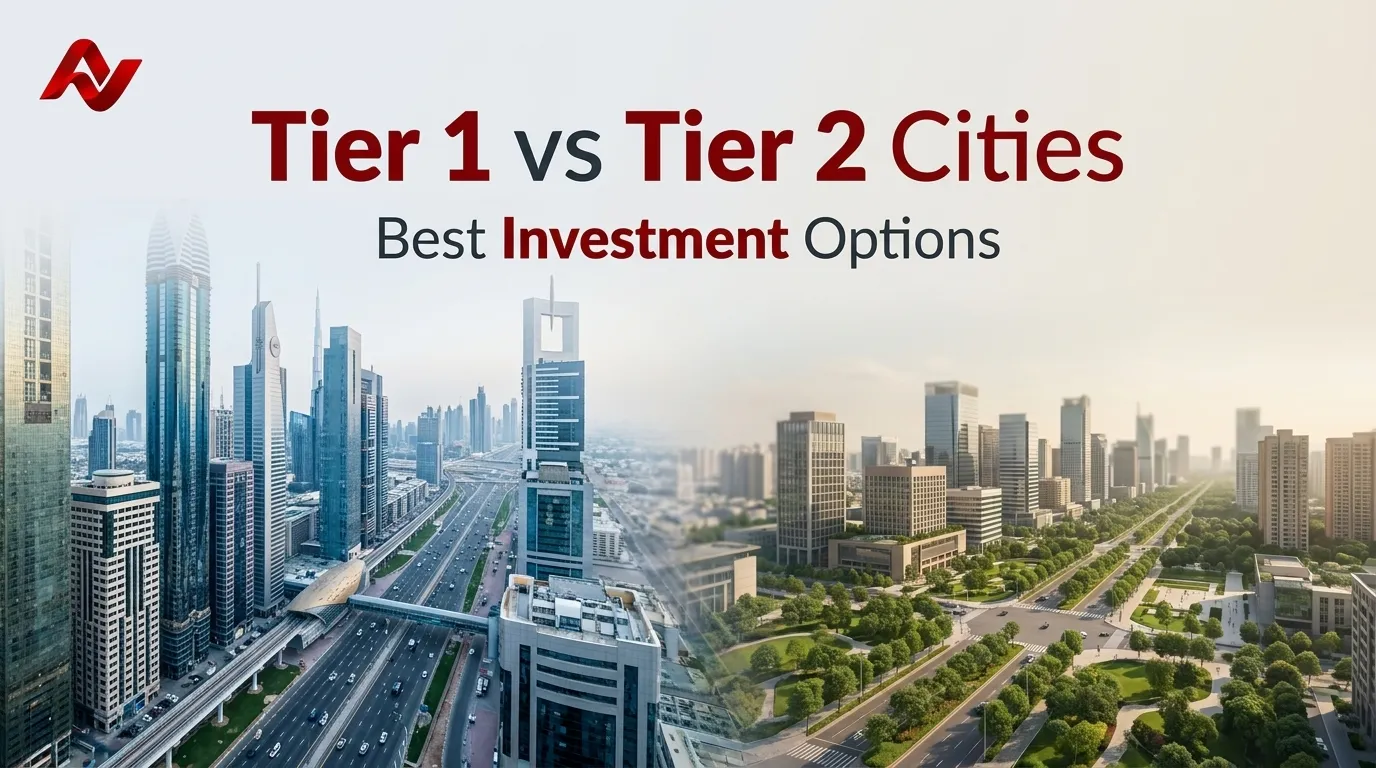
Tier 1 vs Tier 2 Cities: Best Investment Options Explained
Deciding whether to invest in the established high-rises of a Tier 1 city or the emerging horizontal sprawls of a Tier 2 town is the ultimate dilemma for the modern Indian real estate investor. For decades, the narrative was simple: if you wanted real money, you bought in Mumbai, Delhi, or Bangalore. But the post-pandemic world has flipped the script, with cities like Jaipur, Indore, and Coimbatore showing growth percentages that make metro residents blink twice. You aren't just choosing a location; you're choosing between a high-ticket, stable rental machine and a lower-entry, high-appreciation growth engine. Understanding the underlying economic shifts is the only way to ensure your capital doesn't get stuck in a stagnant pocket.
Here's the thing: I've seen investors pump ₹2 Crore into a 2BHK in South Mumbai, only to see it appreciate by a measly 4% while their cousin's ₹50 Lakh plot in Lucknow doubled in three years. On the flip side, I've seen people buy land in "up-and-coming" Tier 2 areas that stayed "up-and-coming" for twenty years without a single tenant. You'll need to balance your risk appetite with your liquidity needs. Most buyers ignore the macro-infrastructure push that is currently moving the "center of gravity" of Indian real estate. In this guide, we'll dive deep into the math and the reality of both markets to help you pick your winner.
Table of Contents
- Tier 1 Cities: The Established Powerhouses
- Tier 2 Explosion: The Smart City Effect
- Rental Yields vs. Capital Gains: The Crucial Split
- Infrastructure Push: Gati Shakti and Metro Expansions
- Reverse Migration and the Rise of Hybrid Work
- Financial Impact: A ₹1 Crore Investment Case Study
- Side-by-Side: Tier 1 vs Tier 2 Metrics
- Pros and Cons of Metro vs. Emerging Markets
- Practical Tips for Identifying High-Growth Pockets
- Common Mistakes to Avoid in Emerging Markets
- Conclusion: Which One Should You Pick?
- Frequently Asked Questions
Tier 1 Cities: The Established Powerhouses
Tier 1 cities like Mumbai, Delhi-NCR, Bangalore, and Hyderabad remain the safest harbor for institutional capital and large-ticket residential investments. These cities are the primary engines of the Indian economy, hosting the headquarters of global IT giants and multinational conglomerates. When you buy a property in a prime Tier 1 locality, you are buying into an ecosystem with guaranteed demand. For example, a flat in Bangalore's Whitefield or Hyderabad's HITEC City will almost never sit vacant. The rental market here is a well-oiled machine, driven by a constant influx of high-salaried professionals.
Most buyers ignore the "Stability Premium" that Tier 1 cities offer. While the percentage of capital appreciation might feel slower because the base price is already so high, the liquidity is unmatched. If you need to sell a ₹3 Crore flat in Gurgaon, you'll find a buyer much faster than you would for a large bungalow in a Tier 2 town. Here's the thing: Tier 1 is for those who value wealth preservation and steady cash flow over speculative gambles. You'll find that the infrastructure is mature, the social life is vibrant, and the resale market is deep. It's a "low-risk, steady-reward" play that forms the foundation of any serious portfolio.
Tier 2 Explosion: The Smart City Effect
The "Smart City" mission and improved air connectivity have put Tier 2 cities like Indore, Surat, Kochi, and Chandigarh on the global investment map. These cities are no longer just "small towns"; they are becoming regional hubs with their own IT parks, international airports, and luxury malls. For a middle-class investor, Tier 2 offers the chance to own "land" (plots)—a commodity that has become prohibitively expensive or non-existent in metros. You can buy a sprawling plot in a gated community in Jaipur for the price of a studio apartment's down payment in Mumbai.
For example, cities like Indore have consistently topped cleanliness and livability indexes, attracting talent that is tired of the pollution and traffic of Delhi or Bangalore. I've observed that the appreciation in Tier 2 cities is often "event-driven." The announcement of a new highway, a metro line, or a new TCS office can hike prices by 20% overnight. Most metropolitan residents don't realize that the quality of life in a Tier 2 city often exceeds the metro experience today, with zero-commute times and better air quality. If you're looking for 2x or 3x returns over a 7-year horizon, Tier 2 is where the action is.
Rental Yields vs. Capital Gains: The Crucial Split
Residential rental yields in India are notoriously low, but Tier 1 cities still hold a slight edge due to the sheer volume of migrant workers. In a Tier 1 city, you can expect a rental yield of 2.5% to 3.5%. In a Tier 2 city, this often drops to 1.5% to 2.5% because the local population usually owns their homes and the migrant population is smaller. If your goal is to pay off your EMI through rent, Tier 1 is your only hope. However, the capital gain story is the exact opposite. Because Tier 2 cities are growing from a lower base, the headroom for growth is massive.
Here's the thing: you must decide if you want a "monthly check" or a "final jackpot." I've seen many investors get frustrated when their beautiful villa in Indore doesn't find a tenant for six months. In Tier 2, the game is almost entirely about land appreciation. You buy, you hold, and you wait for the city limits to expand to your plot. In Tier 1, the game is about "Yield Compression"—investors are willing to accept lower yields because they know the asset is as good as gold. For instance, in Mumbai, people buy for the "address," while in Jaipur, they buy for the "acreage." Know which game you are playing before you sign the cheque.
Infrastructure Push: Gati Shakti and Metro Expansions
Government initiatives like the PM Gati Shakti plan and the rapid expansion of regional airports have bridged the infrastructure gap between Tier 1 and Tier 2 cities. Ten years ago, traveling from a Tier 2 city to a metro was a chore. Today, many of these cities have 10-12 flights a day to major hubs. The "Bharatmala" project is creating expressways that allow you to drive from Delhi to Jaipur or Dehradun in a few hours. This connectivity is the "DNA" of property appreciation. When a city gets connected, its land value explodes.
Most buyers ignore the "Secondary Infrastructure" like sewage treatment plants, underground cabling, and fiber-optic connectivity that is now standard in Tier 2 Smart Cities. For example, a new metro line in Kanpur or Nagpur isn't just a transport project; it's a signal to developers that the city is ready for high-density luxury housing. I've seen savvy investors follow the "NHAI Map" rather than the "Property Portal" to find their next investment. If you see a major highway bypass being built, that is your "right time" to enter the market. Infrastructure is the only thing that turns a "plot in a jungle" into a "prime residential sector."
Reverse Migration and the Rise of Hybrid Work
The "Work from Anywhere" culture has created a permanent shift in demand, with thousands of high-earning techies moving back to their hometowns in Tier 2 cities. This isn't a temporary trend; it's a structural shift in how we live. When a person earning ₹40 Lakhs a year moves from a rented 2BHK in Bangalore to their parents' home in Indore, they bring "Metro Purchasing Power" to a Tier 2 market. They want the same luxury amenities—swimming pools, clubhouses, and organic grocery stores—they were used to in the city. This is driving the "Premiumization" of Tier 2 real estate.
For example, developers who only operated in Tier 1 cities are now launching massive projects in places like Lucknow and Nagpur. They know that the demand for "Lifestyle Housing" in these cities is underserved. I've observed that these "Returnees" are the ones driving the price hikes. They don't mind paying ₹1 Crore for a flat in a Tier 2 city because they know it would cost ₹4 Crore in Mumbai. I once spoke to a buyer who sold his tiny flat in a congested Bangalore suburb and built a mansion in his hometown. He told me, "I still work for the same US company, but now I live like a king." That sentiment is fueling the Tier 2 boom.
Financial Impact: A ₹1 Crore Investment Case Study
Let's compare the performance of a ₹1 Crore investment in a Tier 1 Metro flat versus a Tier 2 Plotted development over a 7-year period.
| Financial Metric | Tier 1 City (Apartment) | Tier 2 City (Plot/Land) | Notes |
|---|---|---|---|
| Initial Investment | ₹1,00,00,000 | ₹1,00,00,000 | Flat in Suburb vs. Large Plot. |
| Annual Rental Income | ₹3,00,000 (3%) | ₹0 (Land doesn't rent) | Tier 1 provides immediate cash. |
| Maintenance & Taxes | - ₹60,000 / year | - ₹5,000 / year | Land is much cheaper to hold. |
| Capital Appreciation | ~6% (CAGR) | ~12% (CAGR) | Tier 2 grows faster from lower base. |
| Total Rental (7 Years) | + ₹21,00,000 | ₹0 | Ignoring rent inflation. |
| Asset Value (Year 7) | ₹1,50,36,000 | ₹2,21,06,000 | Compound interest at work. |
| NET WEALTH CREATED | ₹71,36,000 | ₹1,21,06,000 | Tier 2 wins on wealth creation! |
Side-by-Side: Tier 1 vs Tier 2 Metrics
Which market fits your investor profile? Use this table to quickly diagnose your needs before you start scouting locations.
| Investment Factor | Tier 1 (Metros) | Tier 2 (Emerging Hubs) |
|---|---|---|
| Entry Ticket Size | High (₹80 Lakh - ₹10 Crore) | Affordable (₹25 Lakh - ₹2 Crore) |
| Resale Liquidity | High (Buy/Sell in weeks) | Moderate (Can take months) |
| Rental Yield | 2.5% - 4% | 1.5% - 2.5% |
| Appreciation Potential | Stable (Beat Inflation) | High (Wealth Creation) |
| Infrastructure State | Mature / Saturated | Developing / Planned |
| Risk Level | Low (Capital Safety) | Moderate to High (Speculative) |
Pros and Cons of Metro vs. Emerging Markets
Every investment has its "Non-Negotiable" flaws and its "Silent" benefits.
Tier 1 (Metro) Pros
- Job Market Proximity: Your property will always be in demand by tenants and future buyers.
- Social Infrastructure: Access to the best hospitals (Apollo/Fortis) and schools (IB/IGCSE) is guaranteed.
- Asset Transparency: RERA compliance is very strict in metros, and documentation is generally cleaner.
Tier 1 (Metro) Cons
- Stagnation: Some areas have already hit their "price ceiling" and won't grow much more.
- Pollution & Stress: The quality of life for an end-user is often lower due to noise and traffic.
Tier 2 (Emerging) Pros
- Value for Money: You can afford a high-end property that would be out of reach in a metro.
- Growth Trajectory: You are investing in the "India Growth Story" at its early stages.
- Low Holding Cost: Property taxes and maintenance for plots are minimal.
Tier 2 (Emerging) Cons
- Liquidity Issues: It's much harder to "exit" quickly if you need urgent cash.
- Infrastructure Delays: A "proposed" highway can take 10 years longer than promised.
Practical Tips for Identifying High-Growth Pockets
The "Golden Rule" for Tier 2 investment is to buy on the "Peripheral Ring Road" rather than the city center. The city center of a Tier 2 town is often congested and has no room for new development. The real appreciation happens on the outskirts where the new highways and IT parks are being built. Also, look for the "Brand Footprint." If national developers like Godrej, Prestige, or Lodha are entering a Tier 2 city, it means they have done the research for you. Follow the giants. Most buyers ignore these "Corporate Movements" and buy in local projects that lack long-term vision.
Another practical tip: Check the "Electricity and Water" master plan of the city. A Tier 2 city with a robust water supply (like Indore or Chandigarh) will always grow faster than one that depends on tankers. Also, look for "Institutional Anchors"—if a city has an IIT, an IIM, or a major hospital like AIIMS, it creates a "Permanent Demand" for high-quality housing. Don't buy where people go for a weekend; buy where people go to build a career. That's the secret to consistent real estate returns.
Common Mistakes to Avoid in Emerging Markets
The biggest mistake in Tier 2 cities is buying "Agricultural Land" without checking its "Change of Land Use" (CLU) status. Many local brokers will sell you a plot promising it will become residential soon. In India, CLU can take years and involves heavy corruption and red tape. If the land isn't already "Non-Agricultural" (NA), walk away. Another blunder is ignoring the "Boundary Wall." In Tier 2 cities, land encroachment is a real risk. If you buy a plot and don't fence it or visit it for five years, you might find someone else living there. Most metro buyers ignore these "Physical Security" aspects.
Don't fall for the "Future Airport" trap unless the land acquisition is 100% complete. I've seen people buy land near "proposed" airports that were eventually moved 50 kilometers away due to environmental issues. Also, don't ignore the "Maintenance Gap." A luxury project in a Tier 2 city might look great on day one, but if the developer doesn't have a history of managing properties, the clubhouse and pool will be in ruins within three years. Always buy from a developer who has a "Facility Management" arm. Always check the FSI rules before you buy for the view.
Conclusion: Which One Should You Pick?
The choice between Tier 1 and Tier 2 depends entirely on your current financial goal—buy Tier 1 for 'Safety and Income' and Tier 2 for 'Growth and Wealth.' If you are a retiree looking for a stable rent to fund your monthly expenses, Tier 1 is your sanctuary. If you are a young professional looking to turn ₹50 Lakh into ₹2 Crore over the next decade, Tier 2 is your playground. Real estate is a 10-year game, so don't pick based on a 1-year trend. Pick based on where people will want to live, work, and raise their families in the year 2035.
My final advice? Diversify if you can. Keep your primary residence or a small flat in a Tier 1 city for stability, and use your surplus capital to buy a plot or a villa in a high-growth Tier 2 hub. This "Hybrid Strategy" protects you from a metro stagnation while giving you a ticket to the emerging market boom. Take your time, do the field-checks, and don't trust the brochures blindly. Indian real estate is full of gems, but you need to dig past the marketing to find them. Happy investing!
Tags
Tags
Top 5 Best Properties in Delhi NCR This Week
Handpicked properties with best price & location
Popular in Greater Noida
Top-rated residential & commercial projects across Greater Noida