
How to Check Property Papers in UP Before Buying

Categories
- Tips
- Guides
- Market Insights
- Articles
Recent Posts
Tips / 28 Sept 2026
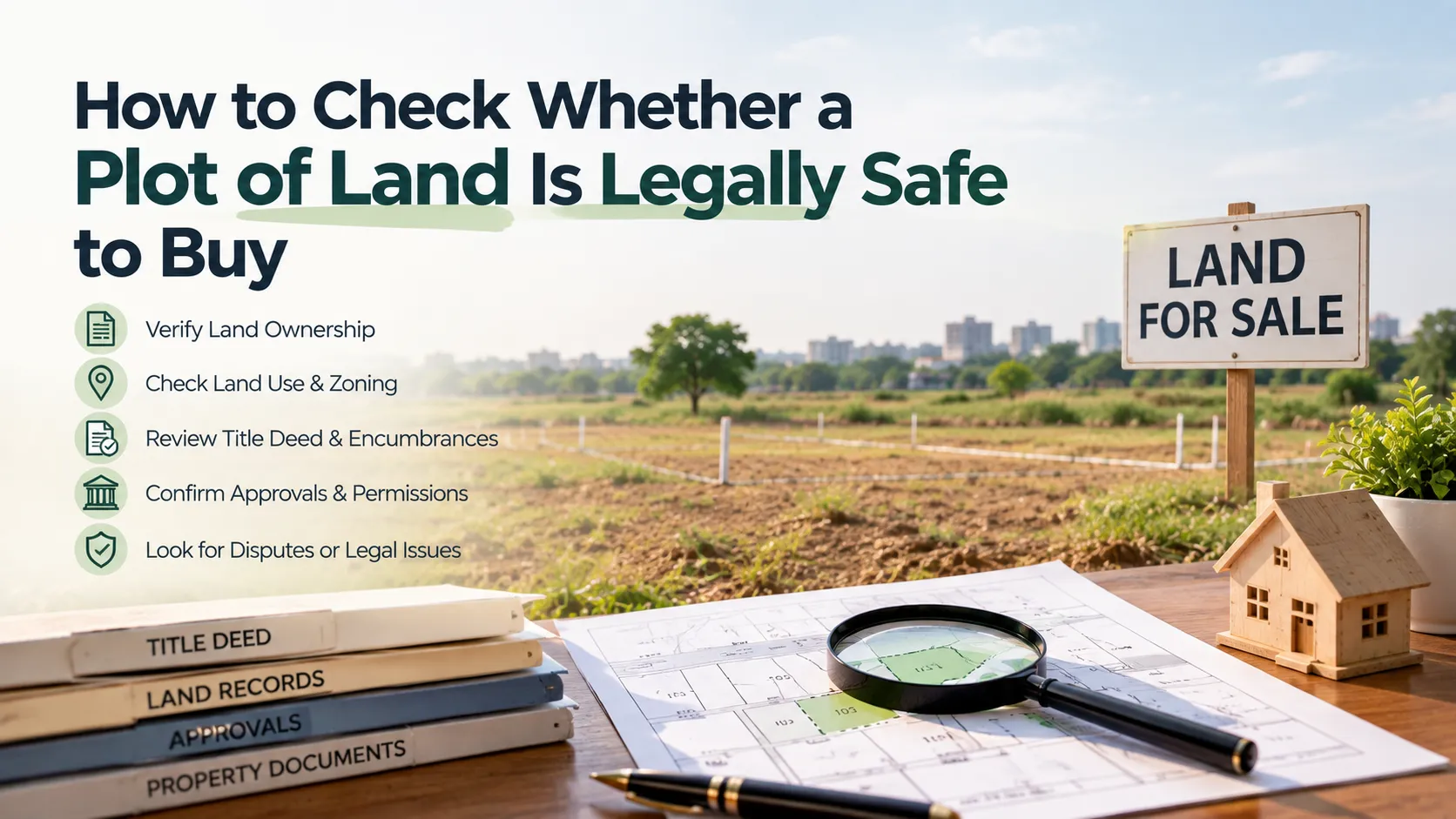
How to Check Whether a Plot of Land Is Legally Safe to Buy
Guides / 28 Sept 2026
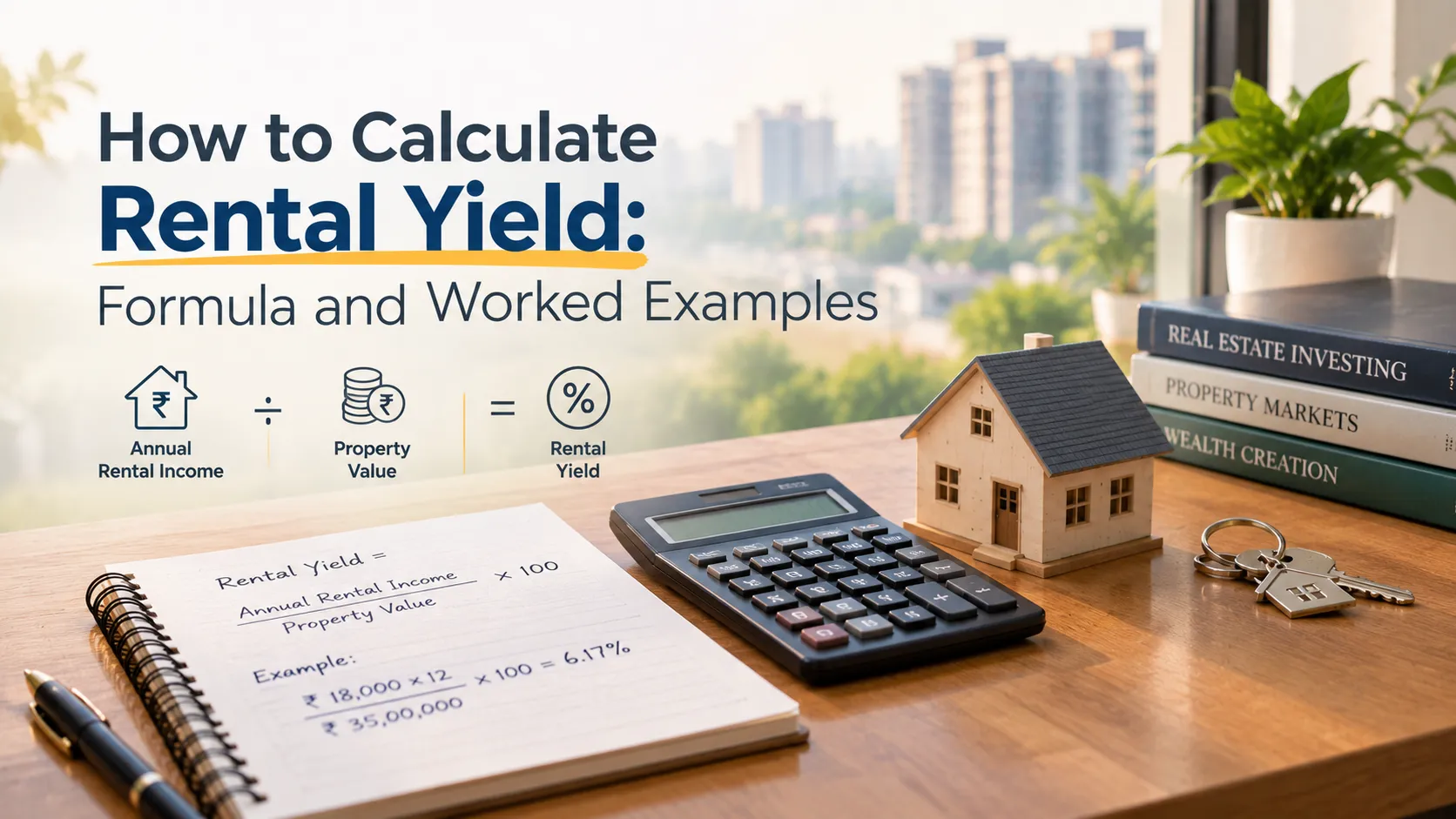
How to Calculate Rental Yield: Formula and Worked Examples

Guides / 26 Sept 2026
How Much Home Loan Can You Get on Your Salary in 2026?

Guides / 25 Sept 2026
10 Things to Check in a Property Sale Deed Before Registration
A clean current sale deed can still sit on top of a broken title chain underneath it. Here's the full property document checklist worth running before you buy in UP, why the chain matters more than any single paper, and the red flags that separate a legitimate gap from a real problem.
How to Check Property Papers starts, for most buyers, with one document: the sale deed the seller hands over. Property Papers Verification done properly starts somewhere earlier than that, with the question of whether the person selling you the property could legally have sold it to the person before them, and so on, back through however many hands it's changed. Property Document Verification in Uttar Pradesh specifically means checking a chain, not a single certificate, because a perfectly clean, correctly registered current sale deed can still sit on top of a broken or disputed title underneath it. Property Ownership Verification that stops at "does this deed look official" is checking the least important part of the paper trail.
Here's the actual checklist, and more importantly, the order that matters.
The Full Document Checklist for UP Property
Before any money changes hands, these are the papers worth requesting and independently verifying, not just glancing at:
| Document | What It Confirms |
|---|---|
| Registered Sale Deed (current + prior chain) | Legal transfer of ownership, ideally traced back at least 30 years |
| Khasra-Khatauni | Land identity and recorded ownership per revenue records (rural/plotted land) |
| Mutation Record (Dakhil-Kharij) | Whether the revenue record has been updated to reflect the latest owner |
| Encumbrance Certificate | Whether any loan, mortgage, or legal claim is registered against the property |
| Approved Building Plan / Map Sanction | Whether construction matches what the development authority actually approved |
| Completion / Occupancy Certificate | Whether the finished construction has formal sign-off, required for legal occupation |
| RERA Registration Certificate | Whether the project is registered and disclosed to the regulator (for under-construction property) |
| Society / Builder NOC | No-objection for resale transfer, dues clearance |
| Latest Property Tax Receipt | No outstanding municipal dues tied to the property |
| Power of Attorney (if applicable) | Whether the person selling on someone else's behalf actually has valid, registered authority to do so |
Why the Chain of Title Matters More Than the Current Deed
A current sale deed only tells you that the immediately previous owner transferred the property to the current seller, correctly. It says nothing about whether that previous owner actually had clean title to transfer in the first place. If somewhere three or four transactions back, a property was sold by someone without full legal right to sell it, forged documents, an incomplete inheritance settlement, a disputed partition, that defect doesn't disappear just because several clean-looking transactions happened afterward. It sits there, waiting to surface, often only when the current owner tries to sell or mortgage the property and a bank's legal team traces the chain back further than a typical buyer would think to.
This is why property lawyers in UP conventionally ask for at least a 30-year title chain, not because the most recent deed is unreliable, but because that's roughly how far back a genuine defect needs to be traced to have a reasonable degree of confidence it doesn't exist.
Land vs Flat: Different Papers Carry Different Weight
For agricultural or plotted land, the Khasra-Khatauni and mutation record carry the most weight, they're the primary evidence of who the revenue department recognises as the current owner. Our detailed guide on how to check and read your Khasra Khatauni walks through that process specifically.
For an apartment or flat, the building plan approval, completion certificate, and RERA registration matter just as much as the ownership chain, because a flat can have a perfectly clean sale deed while sitting in a building that was never actually approved to be built the way it was, or one that's missing its occupancy certificate years after possession. Both categories of risk are real, and they require checking different documents.
Red Flags Worth Stopping On
- A seller who can only produce the current deed, with no earlier documents and no explanation for the gap.
- A mutation record that's never been updated, years after the last recorded sale, with no documented reason.
- An Encumbrance Certificate showing an active, undisclosed loan the seller didn't mention upfront.
- A completion certificate that doesn't exist for a building that's been occupied for years.
- A Power of Attorney that's general rather than specific to this particular property transaction.
None of these automatically mean fraud. Some have entirely legitimate explanations, a recent inheritance, a pending mutation application, a builder who's still finalising completion paperwork. What separates a legitimate gap from a real problem is whether the seller can produce documentation explaining it, or whether they get vague, defensive, or push you to move faster instead.
What Actually Happens If You Skip This
The cost of skipping proper document verification rarely shows up immediately. It shows up later, when you try to sell the property yourself and a buyer's lawyer flags a defect from three transactions back, or when you apply for a home loan against the property and the bank's legal team refuses clearance over a gap in the chain, or in the rare but genuinely damaging case, when a legal heir who was never properly settled resurfaces to contest ownership years after you've paid full price and moved in. Teams that handle this kind of due diligence regularly, including ours at Avorix Realty, see the same pattern repeatedly: the buyers who get into trouble aren't the ones who found a red flag and walked away, they're the ones who never checked far enough back to find it.
The Bottom Line
Property papers verification in UP isn't a single document check, it's a chain, and the chain matters more than any individual link in it. A clean current sale deed is the starting point for verification, not the end of it. If you're weighing a purchase right now, the question worth asking isn't "do these papers look official", it's "how far back does this trail actually go, and does every link in it hold up."
Tags
Tags
Frequently Asked Questions
About the Author
Admin
Top 5 Best Properties in Delhi NCR This Week
Handpicked properties with best price & location
Popular in Greater Noida
Top-rated residential & commercial projects across Greater Noida