
Khasra Khatauni UP: How to Find and Read Your Land Record Online
Categories
- Tips
- Guides
- Market Insights
- Articles
Recent Posts

Tips / 28 Sept 2026
How to Check Whether a Plot of Land Is Legally Safe to Buy
Guides / 28 Sept 2026
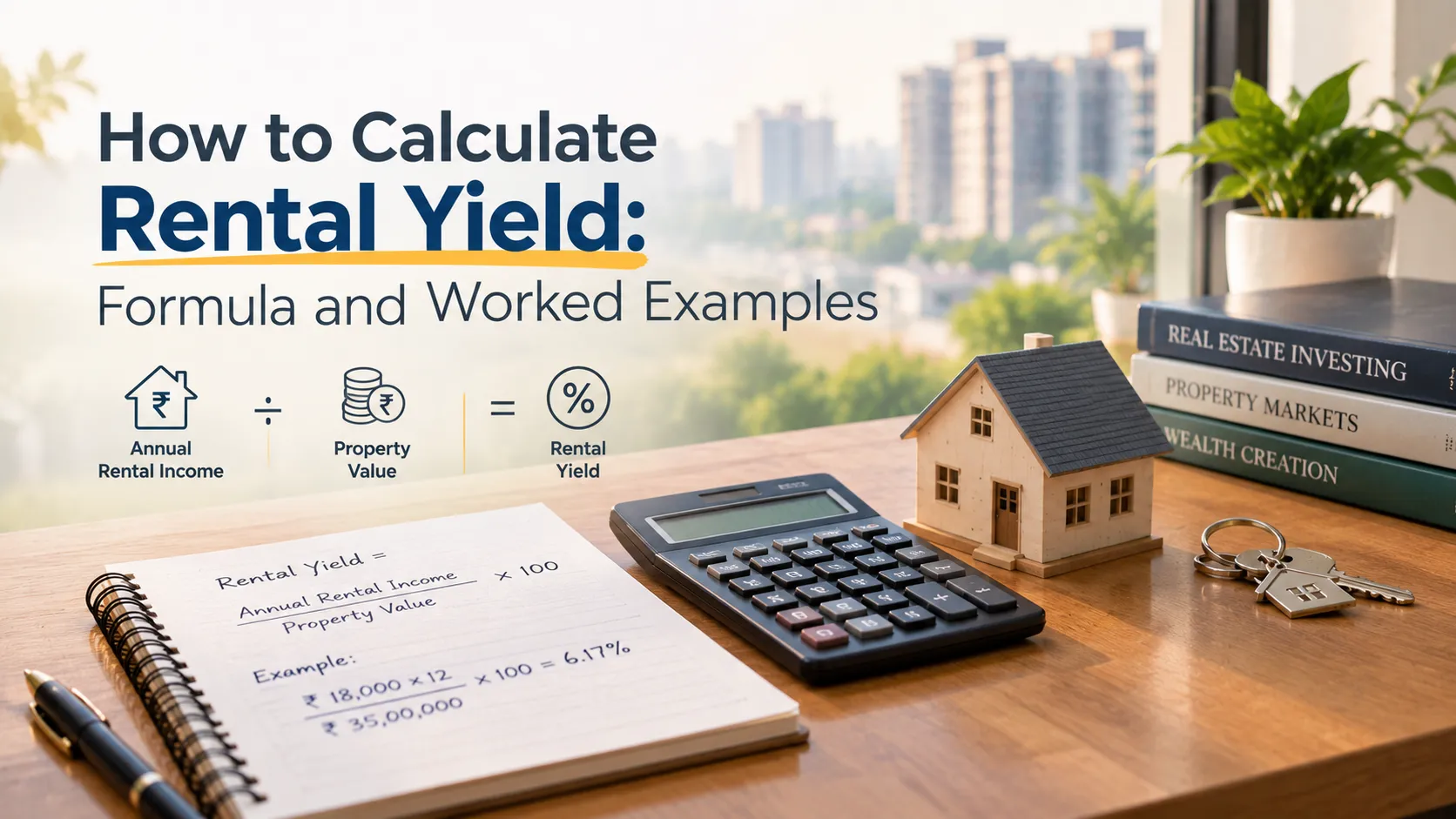
How to Calculate Rental Yield: Formula and Worked Examples

Guides / 26 Sept 2026
How Much Home Loan Can You Get on Your Salary in 2026?

Guides / 25 Sept 2026
10 Things to Check in a Property Sale Deed Before Registration
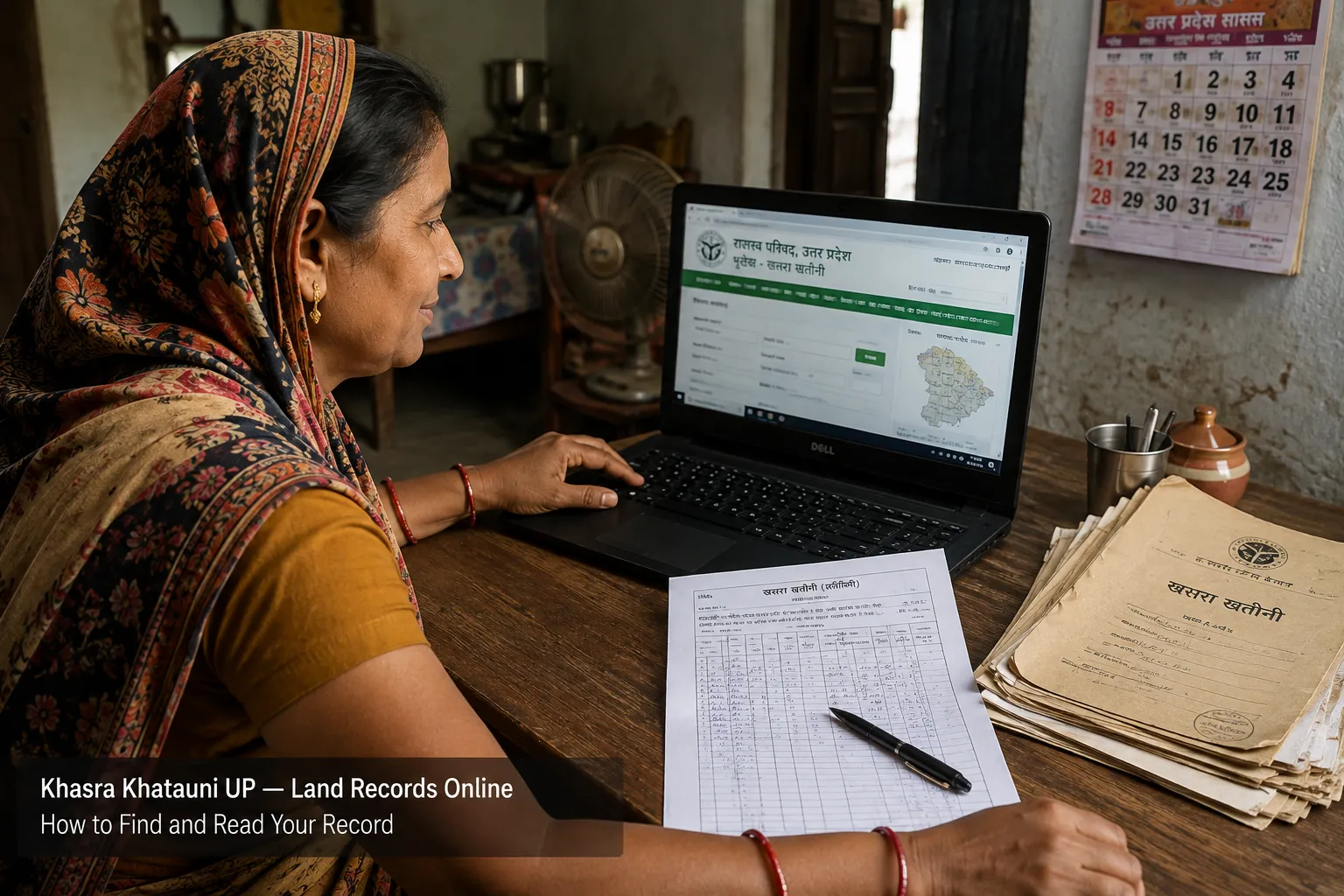
Khasra Khatauni UP explained end to end: what the terms actually mean, how to check your land record on UP Bhulekh in a few clicks, how to read every field on the Khatauni, and the common mistakes that trip up first-time verifiers.
Khasra Khatauni UP is one of those terms every property buyer in Uttar Pradesh eventually has to understand, usually right when they're trying to verify a piece of land before signing something. UP Land Records used to mean a trip to the tehsil office and a wait that could stretch for days. UP Bhulekh changed that: it's the state government's official portal for checking Khasra Khatauni online, from any device, without standing in a queue. This guide walks through exactly how to find your record, and just as importantly, how to actually read it once you have it.
Whether you're buying land, verifying a seller's ownership claim, or just confirming your own family's agricultural holding, the process below applies the same way.
Table of Contents
- What Are Khasra and Khatauni, Exactly?
- Why This Matters Before You Buy Property
- How to Check Khasra Khatauni Online on UP Bhulekh
- Real-Time Khatauni vs the Regular Copy
- How to Read Your Khatauni: What Each Field Means
- Common Mistakes When Checking Land Records
- How This Fits Into Your Property Purchase
- The Bottom Line
What Are Khasra and Khatauni, Exactly?
Khasra is a unique number assigned to a specific plot of land, essentially its identity number within a village's revenue records. Every plot in a village has one, and it's what you use to locate a specific piece of land within the larger land record system.
Khatauni is different, it's the record of rights (Record of Rights, or RoR) that lists who owns or holds rights over one or more Khasra plots, typically grouped under a single account or Khata number. In practice, a Khatauni can cover multiple Khasra numbers if the same owner holds several adjoining or scattered plots in the same village.
Together, Khasra Khatauni gives you two connected pieces of information: which specific plot you're looking at, and who officially holds rights to it according to state revenue records.
Why This Matters Before You Buy Property
For agricultural land and plotted land in particular, the Khatauni is one of the most important documents to verify before any money changes hands. It tells you whether the person selling the land is actually the recorded owner, whether there are multiple co-owners you'd need consent from, and whether the land has any recorded disputes or encumbrances against it. Skipping this check is one of the more common, and more expensive, mistakes buyers make when purchasing land outside formal, RERA-registered developments.
How to Check Khasra Khatauni Online on UP Bhulekh
- Go to the official UP Bhulekh portal at upbhulekh.gov.in.
- On the homepage, click "खतौनी (अधिकार अभिलेख) की नकल देखें" (View copy of Khatauni / Record of Rights).
- Enter the captcha code shown on screen and proceed.
- Select your District, Tehsil, and Village from the dropdown menus.
- Choose your search method: by Khasra/Gata number, by Khata (account) number, or by the owner's name.
- Enter the relevant number or name, then submit the query.
- The Khatauni details will display, including the names of all recorded account holders for that plot.
You can view the record directly on screen, and most versions of the portal also allow you to save or print a copy for your own records.
Real-Time Khatauni vs the Regular Copy
UP Bhulekh also offers a separate "Real-Time Khatauni" option on the homepage, which reflects the most current state of the record, including any recent mutations (ownership transfers) that may not yet be captured in the standard copy. If you're verifying land right before a transaction, checking the real-time version specifically is worth the extra step, since standard copies can occasionally lag behind recent changes in ownership.
How to Read Your Khatauni: What Each Field Means
| Field | What It Means |
|---|---|
| Khasra/Gata Number | The unique plot identifier within the village |
| Khata Number | The account number grouping one or more Khasra plots under an owner |
| Gata Code | A 16-digit unique identification code assigned to the property nationally |
| Owner Name(s) | Recorded holder(s) of rights over the plot, may list multiple co-owners |
| Land Type/Category | Classification such as agricultural, residential, or other use category |
| Area | The recorded size of the plot, typically in bigha, biswa, or hectares |
| Patta | Indicates if the land is held on lease; the transfer process for this is called Pattanama |
If any of these fields don't match what a seller has verbally told you, particularly the owner name or area, that's a discrepancy worth resolving before proceeding, not after.
Common Mistakes When Checking Land Records
- Relying only on a physical copy shown by the seller. Always cross-check independently on the portal, physical copies can be outdated or, in rare cases, altered.
- Not checking for co-owners. A Khatauni listing multiple names means you need consent or a clear release from every listed owner, not just the person negotiating with you.
- Confusing Khasra number with Khata number. These are different identifiers, and using the wrong one will return the wrong or no result.
- Skipping the real-time check. A standard copy might not reflect a very recent ownership transfer, always verify the real-time version for time-sensitive transactions.
How This Fits Into Your Property Purchase
Khasra Khatauni verification is just one piece of a larger documentation process. For a complete picture of everything you should verify before buying, our guide to the 16 essential real estate documents every home buyer must know covers the rest of the checklist. And once you've confirmed the land or property details, you'll also want to budget for stamp duty and registration, our stamp duty calculator for Delhi NCR can give you an instant estimate of that cost.
The Bottom Line
Checking Khasra Khatauni online through UP Bhulekh takes a few minutes and costs nothing, and it's one of the simplest, highest-value verification steps available to anyone buying land or property in Uttar Pradesh. Skipping it to save time is rarely worth the risk, land disputes and ownership discrepancies are far more expensive to resolve after a purchase than a five-minute check would have been before one.
Verifying land or property in UP and want help interpreting a Khatauni or the documents around it? Book a site visit with us and we'll help you go through the paperwork properly. #PropertyKaDNA
Tags
Tags
Frequently Asked Questions
About the Author
Admin
Top 5 Best Properties in Delhi NCR This Week
Handpicked properties with best price & location
Popular in Greater Noida
Top-rated residential & commercial projects across Greater Noida